
读过《Despite the Best Intentions》 🌕🌕🌕🌕🌑
第一章对“反文化”复制社会不平等的反思有意思,控制了ses 和性别(采访了女生),作者们很细致注意到了郊区好学区学校这个背景。但他们这个简易的混合方法感觉有点一般。第三章有些模棱两可,除了看有色学生更容易被拎出去和区别对待来讲race matters,其实这些差异也和class inequality密切相连,我觉得对class的强调不到位。第四章提到老师们对非裔拉美裔刻意降低了预期,感觉跟对亚裔有高预期一样,都是先入为主的种族刻板印象导致了他们重复生产了这些刻板印象的行为,一个先导课还得家长争取才能送娃去上,也是醉了。第五章白人家长的积极介入维系再生产了不平等也可以,真太常见了。后面这几章写的都很好。
Book
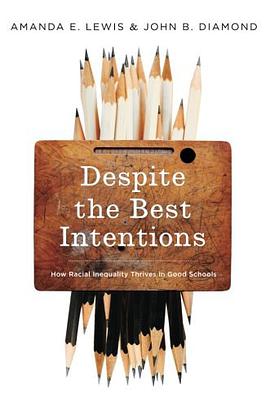
Despite the Best Intentions
Douban
Amanda E. Lewis
publishing house:
Oxford University Press
2017
- 5
On the surface, Riverview High School looks like the post-racial ideal. Serving an enviably affluent, diverse, and liberal district, the school is well-funded, its teachers are well-trained, and many of its students are high achieving. Yet Riverview has not escaped the same unrelenting question that plagues schools throughout America: why is it that even when all of the circumstances seem right, black and Latino students continue to lag behind their peers?
Through five years' worth of interviews and data-gathering at Riverview, John Diamond and Amanda Lewis have created a rich and disturbing portrait of the achievement gap that persists more than fifty years after the formal dismantling of segregation. As students progress from elementary school to middle school to high school, their level of academic achievement increasingly tracks along racial lines, with white and Asian students maintaining higher GPAs and standardized testing scores, taking more advanced classes, and attaining better college admission results than their black and Latino counterparts. Most research to date has focused on the role of poverty, family stability, and other external influences in explaining poor performance at school, especially in urban contexts. Diamond and Lewis instead situate their research in a suburban school, and look at what factors within the school itself could be causing the disparity. Most crucially, they challenge many common explanations of the 'racial achievement gap,' exploring what race actually means in this situation, and why it matters.
An in-depth study with far-reaching consequences, Despite the Best Intentions revolutionizes our understanding of both the knotty problem of academic disparities and the larger question of the color line in American society.