读过 The Way We Think 🌕🌕🌕🌕🌑
开篇monk riddle实在清新,很可以理解blending是要对概念隐喻理论做什么:mapping对概念隐喻来说是其机制根本所在,意义在隐喻中是从地图转移到实景、从一物借来挪去到另一物;blending机制的核心行为则是projection,把空间中不同位置的物抛掷到一个平面上,在含有冲突的并置中涌现了意义。也因为这样,blending看重并置元素的自身语境,保留两个输入空间本来的组织原则。很难理解后面部分着重讨论compression,毕竟在暗示了blending最初理论关切的monk riddle里基本没有概念压缩的参与,执着于心智具身性的视角给心智与现实锤上钉子的话就会和概念隐喻理论一样充满针对意义自治的理论焦虑最后索然无味了
Book
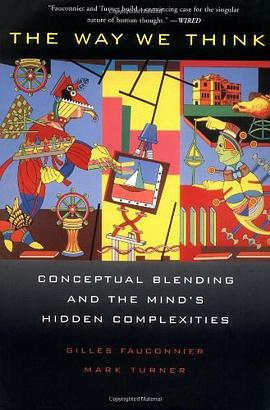
The Way We Think
Douban
Gilles Fauconnier
/
Mark Turner
publishing house:
Basic Books
2003
- 3
" The Way We Think is a dazzling tour of the complexities of human imagination."--George Lakoff, co-author of Philosophy in the Flesh and Where Mathematics Comes From . In its first two decades, much of cognitive science focused on such mental functions as memory, learning, symbolic thought, and language acquisition--the functions in which the human mind most closely resembles a computer. But humans are more than computers, and the cutting-edge research in cognitive science is increasingly focused on the more mysterious, creative aspects of the mind. The Way We Think is a landmark synthesis that exemplifies this new direction. The theory of conceptual blending is already widely known in laboratories throughout the world; this book is its definitive statement. Gilles Fauconnier and Mark Turner argue that all learning and all thinking consist of blends of metaphors based on simple bodily experiences. These blends are then themselves blended together into an increasingly rich structure that makes up our mental functioning in modern society. A child's entire development consists of learning and navigating these blends. The Way We Think shows how this blending operates; how it is affected by (and gives rise to) language, identity, and concept of category; and the rules by which we use blends to understand ideas that are new to us. The result is a bold, exciting, and accessible new view of how the mind works.