
Book
Arctic Mirrors
Douban
Yuri Slezkine
publishing house:
Cornell University Press
1996
- 10
For over five hundred years the Russians wondered what kind of people their Arctic and sub-Arctic subjects were. "They have mouths between their shoulders and eyes in their chests," reported a fifteenth-century tale. "They rove around, live of their own free will, and beat the Russian people," complained a seventeenth-century Cossack. "Their actions are exceedingly rude. They do not take off their hats and do not bow to each other," huffed an eighteenth-century scholar. They are "children of nature" and "guardians of ecological balance," rhapsodized early nineteenth-century and late twentieth-century romantics. Even the Bolsheviks, who categorized the circumpolar foragers as "authentic proletarians," were repeatedly puzzled by the "peoples from the late Neolithic period who, by virtue of their extreme backwardness, cannot keep up either economically or culturally with the furious speed of the emerging socialist society."
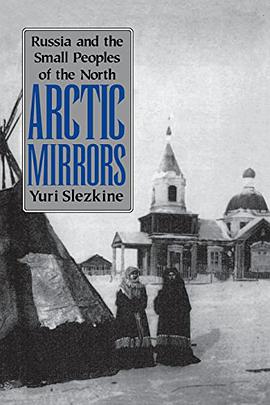
Whether described as brutes, aliens, or endangered indigenous populations, the so-called small peoples of the north have consistently remained a point of contrast for speculations on Russian identity and a convenient testing ground for policies and images that grew out of these speculations. In Arctic Mirrors, a vividly rendered history of circumpolar peoples in the Russian empire and the Russian mind, Yuri Slezkine offers the first in-depth interpretation of this relationship. No other book in any language links the history of a colonized non-Russian people to the full sweep of Russian intellectual and cultural history. Enhancing his account with vintage prints and photographs, Slezkine reenacts the procession of Russian fur traders, missionaries, tsarist bureaucrats, radical intellectuals, professional ethnographers, and commissars who struggled to reform and conceptualize this most "alien" of their subject populations.
Slezkine reconstructs from a vast range of sources the successive official policies and prevailing attitudes toward the northern peoples, interweaving the resonant narratives of Russian and indigenous contemporaries with the extravagant images of popular Russian fiction. As he examines the many ironies and ambivalences involved in successive Russian attempts to overcome northern—and hence their own—otherness, Slezkine explores the wider issues of ethnic identity, cultural change, nationalist rhetoric, and not-so European colonialism.