
Book
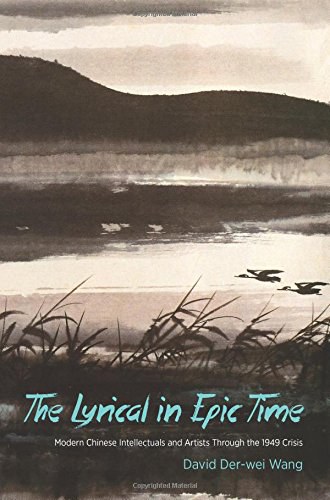
The Lyrical in Epic Time
Douban
David Der-wei Wang
publishing house:
Columbia University Press
2015
- 2
This book positions the lyrical as key to rethinking the dynamics of Chinese modernity and emphasizes Chinese lyricism's deep roots in its own native traditions, along with Western influences. Although the lyrical may seem like an unusual form for representing China's social and political crises in the mid-twentieth century, David Der-wei Wang contends that national cataclysm and mass movements intensified Chinese lyricism in extraordinary ways. He calls attention to not only the vigor and variety of Chinese lyricism at an unlikely historical juncture but also the precarious consequences it brought about: betrayal, self-abjuration, suicide, and silence. Above all, his study ponders the relevance of such a lyrical calling of the past century to our time.
Despite their divergent backgrounds and commitments, the writers, artists, and intellectuals discussed in this book all took lyricism as a way to explore selfhood in relation to solidarity, the role of the artist in history, and the potential for poetry to illuminate crisis. They experimented with a variety of media, including poetry, fiction, intellectual treatise, political manifesto, film, theater, painting, calligraphy, and music. Wang's expansive research also traces the invocation of the lyrical in the work of contemporary Western critics. From their contested theoretical and ideological stances, Martin Heidegger, Theodor Adorno, Cleanth Brooks, Paul de Man, and many others used lyricism to critique their perilous, epic time. The Chinese case only further intensifies the permeable nature of lyrical discourse, forcing us to reengage with the dominant role of revolution and enlightenment in shaping Chinese -- and global -- modernity.