读过《The 1619 Project: A New Origin Story》 🌕🌕🌕🌕🌕
[有聲書] 真·美國歷史必讀的第一本書。從什麼天降建國神爹開始講的都是狗屎。之前在她們的podcast上聽了一些內容,再來聽成書之後的內容,也不知道是自己忘記了還是當時就沒聽懂,發現還有這麼這麼多這麼誇張的噁心事情。非常不理解一些評論裡“老生常談”“陳詞濫調”的調調,那日軍暴行還早就結束了呢,每年唧唧歪歪什麼呢?
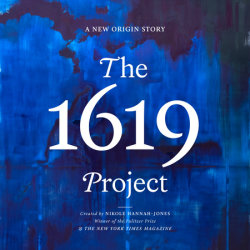
Book
The 1619 Project: A New Origin Story
The 1619 Project: A New Origin Story Goodreads
Nikole Hannah-Jones
publishing house:
Penguin Random House Audio Publishing Group
2021
- 11
A dramatic expansion of a groundbreaking work of journalism, The 1619 Project: A New Origin Story offers a profoundly revealing vision of the American past and present.
In late August 1619, a ship arrived in the British colony of Virginia bearing a cargo of twenty to thirty enslaved people from Africa. Their arrival led to the barbaric and unprecedented system of American chattel slavery that would last for the next 250 years. This is sometimes referred to as the country’s original sin, but it is more than that: It is the source of so much that still defines the United States.
The 1619 Project: A New Origin Story builds on one of the most consequential journalistic events of recent years: The New York Times Magazine’s award-winning “1619 Project,” which reframed our understanding of American history by placing slavery and its continuing legacy at the center of our national narrative. This new book substantially expands on the original 1619 Project, weaving together eighteen essays that explore the legacy of slavery in present-day America with thirty-six poems and works of fiction that illuminate key moments of oppression, struggle, and resistance. The essays show how the inheritance of 1619 reaches into every part of contemporary American society, from politics, music, diet, traffic, and citizenship to capitalism, religion, and our democracy itself. This legacy can be seen in the way we tell stories, the way we teach our children, and the way we remember. Together, the elements of the book reveal a new origin story for the United States, one that helps explain not only the persistence of anti-Black racism and inequality in American life today, but also the roots of what makes the country unique.
The book also features a significant elaboration of the original project’s Pulitzer Prize–winning lead essay, by Nikole Hannah-Jones, on how the struggles of Black Americans have expanded democracy for all Americans, as well as two original pieces from Hannah-Jones, one of which makes a profound case for reparative solutions to this legacy of injustice.
This is a book that speaks directly to our current moment, contextualizing the systems of race and caste within which we operate today. It reveals long-glossed-over truths around our nation’s founding and construction—and the way that the legacy of slavery did not end with emancipation, but continues to shape contemporary American life.