A House Wrapped In Sleep
Bandcamp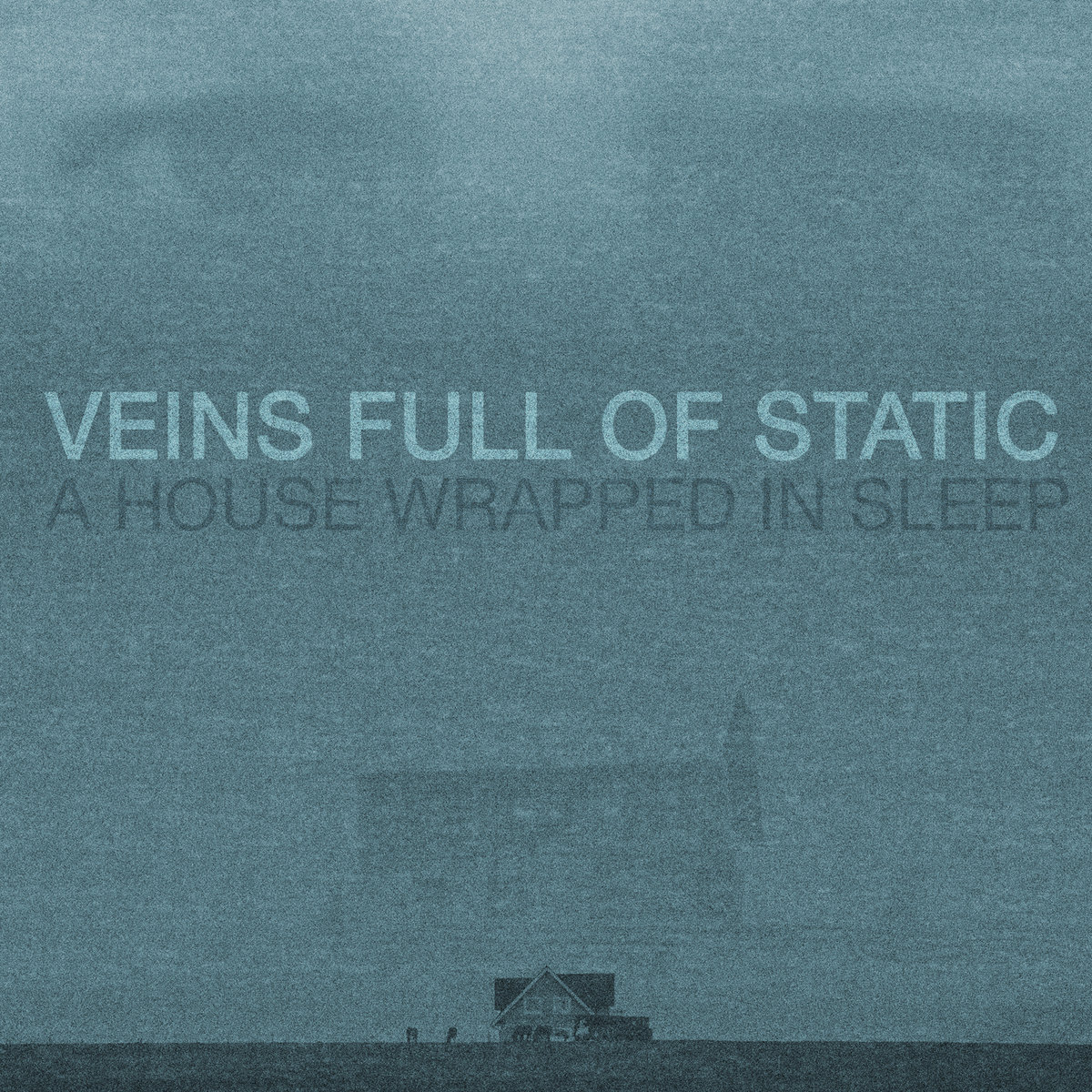
Overview
After last year’s single release, ‘All These Empty Rooms’, we’re delighted to announce a full album from Veins Full Of Static on Machine Records. ‘A House Wrapped in Sleep’ will be available in digital and limited edition CD format on 2 August 2024.
Veins Full Of Static is the ambient/drone project of Cardiff-based Jamie Philpin-Jones, who has been building an impressive body of work over the last 6-7 years. This has included solo and collaborative album releases and compilation tracks on great labels like Disintegration State, This Is It Forever, Waxing Crescent Records, Decaying Spheres, Difficult Art And Music, and Mailbox.
We caught up with Jamie to discuss his new album.
Machine: Tell me about your new album, A House Wrapped In Sleep. What is it all about?
Jamie: Initially, the album wasn’t intended to be about anything. I’d just finished work on the album No Such Rust [released on Waxing Crescent last December], which dealt with grief and loss and all of that fun stuff, so I fancied an escape into music without an agenda. Just playing around with sounds for the sake of themselves. But as it came together a theme imposed itself while I wasn’t looking.
I read an article that stuck with me about brain activity after death. Once the heart stops there’s a strong burst of brain activity and gamma waves in a pattern usually associated with lucid dreaming. I decided to explore a sort of temporary atheist’s afterlife – a time-dilated dream state conjured by the subconscious to sort of ease a person into the void.
A House Wrapped in Sleep loosely follows someone’s journey from drifting into this state after death, their slowly becoming aware of their condition, their struggles to accept it and eventually their consciousness slowly disintegrating into nothing. Which is not quite the nice, light escape I was hoping for!
Machine: It’s fascinating how ideas can emerge unexpectedly, often with a sense that they come from “somewhere else”. Creative practices can be a sort of of summoning of unknown forces, I think.
Jamie: Yeah definitely. I try not to get too mystical about it but I can see why others do. When stuff suddenly clicks together it does feel like it's been conjured from somewhere or handed down from above.
Machine: When we talked about your single ‘All These Empty Rooms’ last year, you mentioned you tend to have a strong sense of what songs are “about”. And you’ve mentioned some pretty deep themes. What do you think is behind wanting to craft these strong narratives through your music?
Jamie: I think I need to have a sense of meaning in my songs because it took me a long time to find a creative outlet that suited me. I've got drawers and hard drives full of half-finished stories and poems and scripts and sets of lyrics. I thought whatever it was I was looking for would involve language, I never dreamed it'd be instrumental music! But there's still a need to convey something in the music, none of it feels finished until it has something of that in it. Even if the listener might not get anything of that meaning just from listening to it.
Machine: Are there artists, musicians or otherwise, who inspire you in taking this approach?
Jamie: In terms of influences I think artists like Biosphere and Loscil who do a lot of stuff focused on geography and elements come to mind, as well as Lawrence English who always has a strong sense of concept to his works. I really fell for his album The Peregrine about the book of the same name. I struggle to create anything as strongly related to nature or locations though - it always seems to come back to inner space, emotions and the workings of the mind. I can't seem to reach too far beyond that for whatever reason.
Machine: There is a lot of angst these days about what counts as success, due in part to the terrible economics of streaming, as well as the positive side of streaming in opening up self-distribution options. You’ve been pretty busy in recent years, working with several different labels and some collaborations - with lots of notable releases. How do you think about those kind of questions, in terms of what it means for Veins Full Of Static?
Jamie: I'll try not to go too long on this answer at it occupies my thoughts more than I'd like to admit! The current situation in DIY and independent music is pretty dire. Personally I still have most of my music on streaming despite their deeply unfair rates as I was never going to earn enough that way for it to make a difference to me either way and I like to have my music available in as many places as possible. It's hard enough to get heard without limiting that. And, though I have a love/hate relationship with the stats, being able to check and find that I've had a small surge in some far off place feels lovely. The idea that my music is being shared by a group of friends in somewhere seemingly random like Indonesia is beautiful enough to me to keep me going when it all feels a bit pointless.
Because as much as I'd like to say the work is it's own reward I'd be lying - if that were the case I wouldn't bother releasing it at all, would I? In terms of what success looks like for me the answer will vary depending on what day you catch me on. There's an incredible number of people making this sort of stuff in the world right now. It's never been easier to create your own little musical world and open it up to the whole of humanity. But it's never been harder to get anyone to come and visit with all that competition.
On my better days I keep that in mind and look for the connections and opportunities Veins Full Of Static brings. Being able to release on cool labels run by lovely people (and usually fine artists in their own right) like yourself is amazing. Getting played on radio shows and podcasts all over the world feels fantastic. I got to soundtrack a short film for BBC Wales last year and I'm hoping to get opportunities to do similar things. That's what success is for Veins Full of Static - making connections and opening doors to fulfilling projects. I like to think of my creative endeavours as tending a garden and as long as things like that keep blossoming I feel like I'm doing well. And getting visitors like those friends in Indonesia or the guy in Tokyo who bought every VFOS tape currently available on the Internet the other day feels amazing.
But on my worst days I think that all sounds like wishy-washy bollocks, go look at the hard streaming numbers and want to all sell my gear and buy a train set or something!
Machine: That's very much the same territory I see, I think a lot of people will relate. I have ended up thinking there is something bigger than just streaming at work here. For most of human history (and pre-history), art was pretty local (and for music, totally ephemeral). But in the 20th century globalisation and recording (to simplify a lot of stuff) created a sort of global stage and a level of success and huge audience for rock/pop measured in sales that is actually unprecedented.
We've grown up with The Beatles and record sales as a yardstick of musical success, and all the other Boomer rock/pop, as if that is the only version of "success". Obviously it is a version of success, and others have achieved that level and will continue to do so (and good on them), but it is not a typical version of creativity or art or music. It attaches music to the idea of the entertainer/the celebrity/the star as well as to a recorded product you buy. By contrast, what I think is happening in the 21st century electronic music scene is a sort of folk movement... which is in many ways a return to a more typical way of doing music for humans. In that context, I think the rise of EMOM nights is very significant.
Jamie: Yeah you've nailed a lot of my thoughts on the atomisation of culture/counter-culture in the 21st century. The trouble is the desire for massive shared experiences is still there and while artists like Taylor Swift achieve unfathomable popularity and influence the mirage of such success remains enticing for artists, so they keep chasing a big viral hit that'll help them 'break through' to a realm that doesn't really exist anymore. I like the idea of the electronic scene as a folk movement and stuff like EMOM's growing success is really heartening to see. It could do with a more sustainable online framework that can't be easily disrupted by the whims of narcissistic billionaires. There was a really nice burgeoning scene on Twitter that still hasn't quite recovered.
Machine: Exactly! I’m actually a bit of a Swiftie but, to state what ought to be the obvious, that type of success is not really the right frame of reference for aspiring experimental electronic musicians! But at the same it’s hard to ignore sometimes, and all too easy to compare once you find yourself considering play counts and sales. Even the absolute legends of electronic music are also dwarfed by that comparison.
Jamie: Oh yeah I was thinking about aspiring artists in general there, not sure many one-person-and-some-synths outfits are expecting to get Swift big!
Machine: For sure. As a final question, what else is coming up for VFOS in 2024?
Jamie: Aside from ‘A House Wrapped in Sleep’ I've got an exciting split release out in the summer on another label and I'm currently polishing off a couple of other albums, though I'm not sure when or where they'll surface. I think I might self-release one and try and find a home for the other but we'll see. And I'm hoping to play live a bit more and get a bit further afield than South Wales. I've got a set I've been working on for a bit and I'm hoping to give it an airing wherever will have me.
I've also started an online hot sauce business () which is taking up a lot of my time. I've got some interesting ideas on how to do some unlikely crossing of the streams of music and hot sauce that I think will be fun - keep an eye out for those!