Bartok - Sonatas for Violin & Piano Nos. 1 & 2; Sonata for Solo Violin
Douban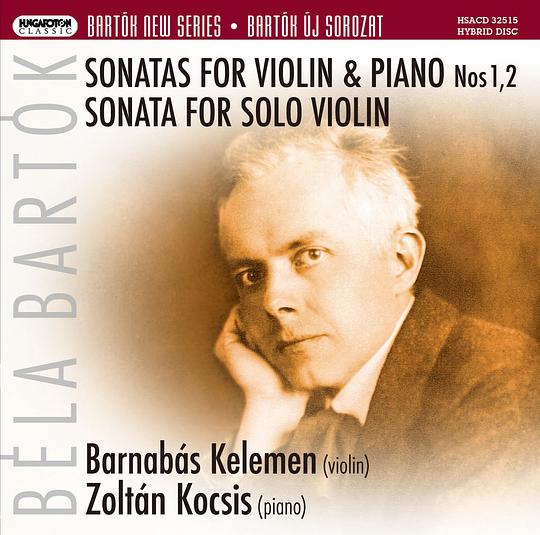
Sinossi
Béla Bartóks two sonatas for violin and piano were conceived in the wake of the isolation of World War I, in pursuit of keeping in touch. Between 1920 and 1923, when these works were published, Bartók travelled around Europe, gave recitals, gathered impressions of fresh musical trends and met the audiences of Debussy, Ravel, Stravinsky and Schoenberg, the young French composers and other Moderns. He eventually began producing sketches for these works, and was inspiration toward completion after meeting the dArányi sisters in Budapest in late 1921. Bartók created the style of the violin part in the first sonata with an intimate knowledge of the traditions and technique of the Hungarian Hubay school and Jelly dArányis playing and temperament, while the piano accompaniment is one of the most powerful and difficult he ever wrote. Its success in concert in 1922 led him to compose the second sonata later that year. In these sibling works, Bartók comes closest to the atonal efforts of his radical contemporaries, without, however, completely abandoning tonal centers. As for the solo violin sonata, this album features the original quartertone version of the fourth movement, excised by its editor and commissioner, the legendary violinist Yehudi Menuhin in its initial and long-standing first edition.
Tracks
Sonata for Violin and Piano No.1
1. Allegro appassionato
2. Adagio
3. Allegro
Sonata for Violin and Piano No.2
4. Molto moderato
5. Allegretto
Sonata for Solo Violin
6. Tempo di ciaccona
7. Fuga
8. Melodia
9. Presto