The Intellectual World of the Italian Renaissance
Douban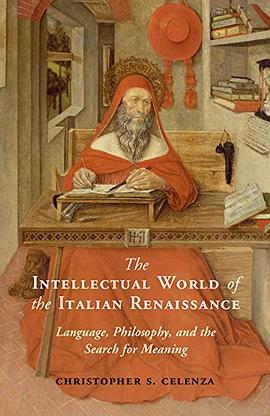
Language, Philosophy, and the Search for Meaning
Christopher S. Celenza
overblik
In this book, Christopher Celenza provides an intellectual history of the Italian Renaissance during the long fifteenth century, from c.1350-1525. His book fills a bibliographic gap between Petrarch and Machiavelli and offers clear case studies of contemporary luminaries, including Leonardo Bruni, Poggio Bracciolini, Lorenzo Valla, Marsilio Ficino, Angelo Poliziano, and Pietro Bembo. Integrating sources in Italian and Latin, Celenza focuses on the linked issues of language and philosophy. He also examines the conditions in which Renaissance intellectuals operated in an era before the invention of printing, analyzing reading strategies and showing how texts were consulted, and how new ideas were generated as a result of conversations, both oral and epistolary. The result is a volume that offers a new view on both the history of philosophy and Italian Renaissance intellectual life. It will serve as a key resource for students and scholars of early modern Italian humanism and culture.
indhold
1. Beginnings
2. Dante, Petrarch, Boccaccio
3. The Italian Renaissance takes root in Florence
4. Florentine humanism, translation, and a new (old) philosophy
5. Dialogues, institutions, and social exchange
6. Who owns culture? Classicism, institutions, and the vernacular
7. Poggio Bracciolini
8. Lorenzo Valla
9. The nature of the Latin language: Poggio versus Valla
10. Valla, Latin, Christianity, culture
11. A changing environment
12. Florence: Marsilio Ficino, I
13. Ficino, II
14. The voices of culture in late fifteenth-century Florence
15. 'We barely have time to breathe'. Poliziano, Pico, Ficino, and the beginning of the end of the Florentine Renaissance
16. Angelo Poliziano's Lamia in context
17. Endings and new beginnings: the language debate