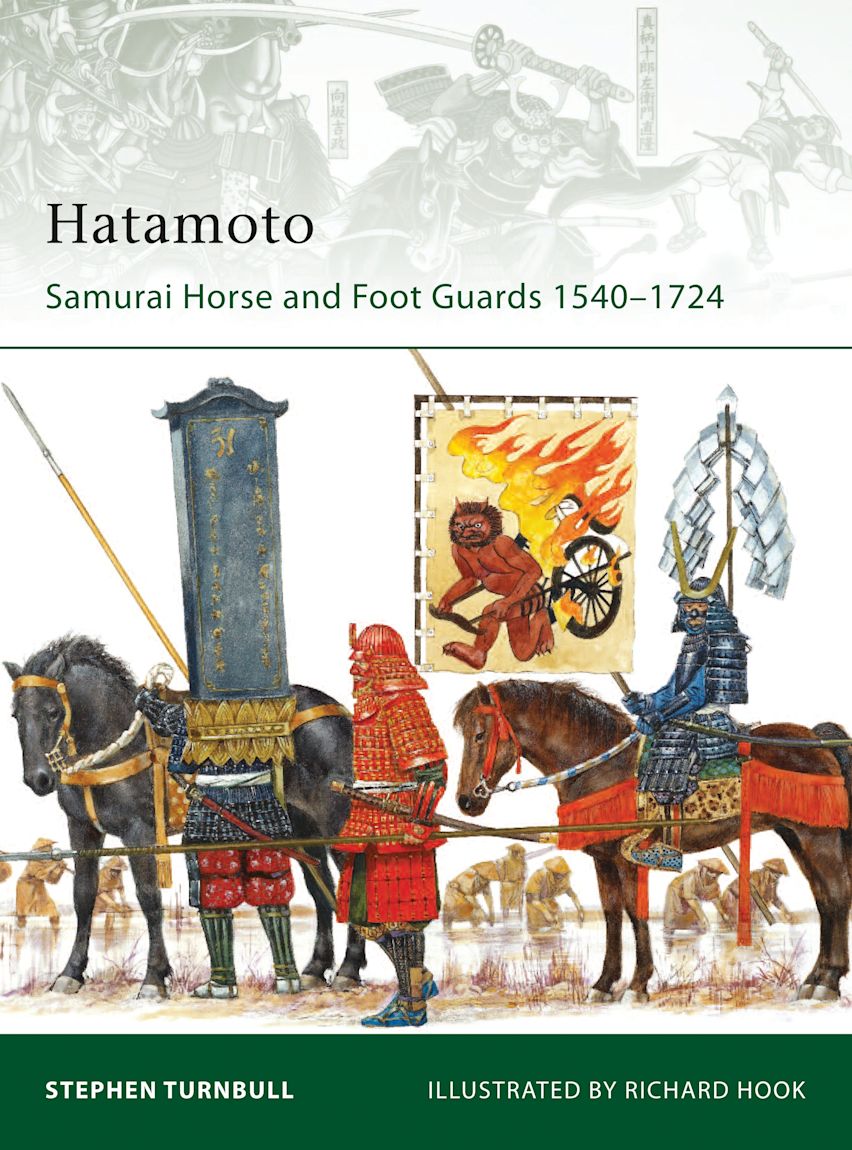
Samurai Horse and Foot Guards 1540–1724
Stephen Turnbull / Richard Hook
簡介
Each great samurai warlord, or daimyo, had a division of troops known as the Hatamoto, 'those who stand under the flag'. The Hatamoto included the personal bodyguards, the senior generals, the standard bearers and colour-guard, the couriers, and the other samurai under the warlord's personal command. Apart from bodyguard and other duties in immediate attendance on the daimyo, both horse and foot guards often played crucial roles in battle. Their intervention could turn defeat into victory, and their collapse meant certain defeat. As favoured warriors under the warlord's eye, members of the bodyguards could hope for promotion, and a few even rose to be daimyo themselves. All the three great leaders of the 16 and 17th centuries – including Oda, Hideyoshi and Tokugawa – had their own elite corps. Such troops were naturally distinguished by dazzling apparel and heraldry, with banners both carried and attached to the back of the armour, all of which will be detailed in an array of colour artwork specially created for this publication.
目錄
Origins of the horse guards – Imperial guards in the Nara period · Emergency of the elite cavalry in the Sengoku period (15th century) · 16th century: the Hojo and Chosokabe families · The organization and role of the warlord's military staff · 1560s: Oda Nobunaga's Red Horo and Black Horo guards – battle of Nagashino 1575 · 1580s: Toyotomi Hideyoshi's Yellow Horo Guard Expansion under the Tokugawa shoguns · Foot guards: development in the 16th–17th centuries · Major battle participation – Okehazama & Imayama · Foot Guards under the Tokugawa