Beyond the Amur
Douban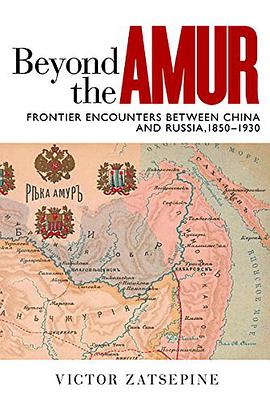
Frontier Encounters between China and Russia, 1850-1930
Victor Zatsepine
résumé
Beyond the Amur describes the distinctive frontier society that emerged in the Amur, a river region that shifted between Qing China and imperial Russia as the two empires competed for resources. Official histories depict the Amur as a distant battleground caught between rival empires. Zatsepine, by contrast, views it as a unified natural economy populated by Chinese, Russian, Indigenous, Japanese, Korean, Manchu, and Mongol people who crossed the border in search of work or trade and who came together to survive a harsh physical environment. This colourful account of a region and its people highlights the often overlooked influence of frontier developments on state politics and imperial policies and histories.
contenus
Preface
Introduction
1. A River Runs through It
2. They Came from Everywhere
3. Fur, Gold, and Local Trade
4. Imperial Russian Expansionism
5. Chinese Migrants in Frontier Towns
6. A Railway Runs through It
7. Conflict and War
8. Fading Frontiers
Conclusion
Appendix A: Chronology
Appendix B: Chinese Terms
Notes
Bibliography
Index