The Transfer of Cognitive Skill
Douban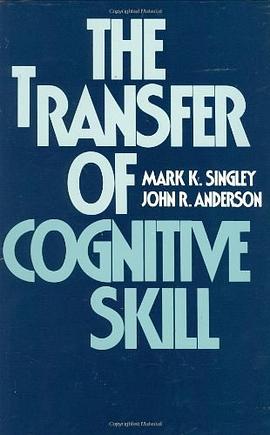
Mark Singley / John R. Anderson
Sinossi
Does a knowledge of Latin facilitate he learning of computer programming? Does skill in geometry make it easier to learn music? The issue of the transfer of learning from one domain to another is a classic problem in psychology as well as an educational question of great importance, which this ingenious new book sets out to solve through a theory of transfer based on a comprehensive theory of skill acquisition. The question was first studies systematically at the turn of the century by the noted psychologist Edward L. Thorndike, who proposed a theory of transfer based on common elements in two different tasks. Since then, psychologists of different theoretical orientations--verbal learning, gestalt, and information processing--have addressed the transfer question with differing and inconclusive results. Singley and Anderson resurrect Thorndike's theory of identical elements, but in a broader context and from the perspective of cognitive psychology. Making use o a powerful knowledge-representation language, they recast his elements into units of procedural and declarative knowledge in the ACT* theory of skill acquisition. One skill will transfer to another, they argue, to the extent that it involves the same productions or the same declarative precursors. They show that with production rules, ransfer can be localized to specific components--in keeping with Thorndike's theory--and yet still be abstract and mentalistic. The findings of this book have important implications for psychology and the improvement of teaching. They will interest cognitive scientists and educational psychologists, as well as computer scientists interested in artificial intelligence and cognitive modeling.