Belonging in the Two Berlins
Douban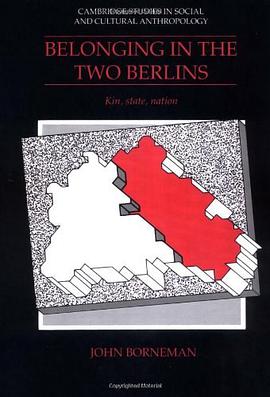
Kin, State, Nation
Borneman, John
résumé
Belonging in the two Berlins is an ethnographic investigation into the meaning of German selfhood during the Cold War. Taking the practices of everyday life in the divided Berlin as his point of departure, Borneman shows how ideas of kin, state, and nation were constructed through processes of mirror-imaging and misrecognition. Using linguistics and narrative analysis, he compares the autobiographies of two generations of Berlins residents with the official version of the lifecourse prescribed by the two German states. He examines the relation of the dual political structure to everyday life, the way in which the two states legally regulated the lifecourse in order to define the particular categories of self which signify Germanness, and how citizens experientially appropriated the frameworks provided by these states. Living in the two Berlins constantly compelled residents to define themselves in opposition to their other half. Borneman argues that this resulted in a de facto divided Germany with two distinct nations and peoples. The formation of German subjectivity since World War II is unique in that the distinctive features for belonging - for being at home - to one side exclude the other. Indeed, these divisions inscribed by the Cold War account for many of the problems in forging a new cultural unity.
contenus
List of figures
List of tables
Acknowledgments
Introduction
1. Naming, categorizing, periodizing
2. Clarification of concepts
3. Demographics of production and reproduction
4. State strategies and kinship
5. Victimization, political reconstruction, and kinship transformations in East Berlin: generation I
6. Sentimentalization, fear, and alternate domestic form in East Berlin: generation II
7. Hausfrauenehe and kinship restoration in West Berlin: generation I
8. Politicized kinship in West Berlin: generation II
9. Marriage, family, nation
Postscript
Notes
References
Index