The Invention of Rare Books
Douban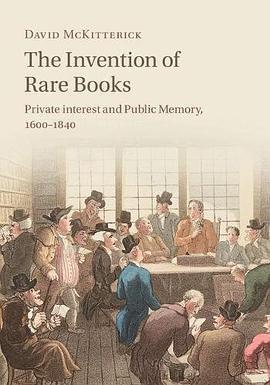
Private Interest and Public Memory, 1600–1840
David McKitterick
résumé
When does a book that is merely old become a rarity and an object of desire? David McKitterick examines, for the first time, the development of the idea of rare books, and why they matter. Studying examples from across Europe, he explores how this idea took shape in the sixteenth and seventeenth centuries, and how collectors, the book trade and libraries gradually came together to identify canons that often remain the same today. In a world that many people found to be over-supplied with books, the invention of rare books was a process of selection. As books are one of the principal means of memory, this process also created particular kinds of remembering. Taking a European perspective, McKitterick looks at these interests as they developed from being matters of largely private concern and curiosity, to the larger public and national responsibilities of the first half of the nineteenth century.
contenus
1. Inventio
2. Books as objects
3. Survival and selection
4. Choosing books in Baroque Europe
5. External appearances (1)
6. External appearances (2)
7. Printers and readers
8. A seventeenth-century revolution
9. Concepts of rarity
10. Developing measures of rarity
11. Judging appearances by modern standards
12. The Harleian sales
13. Authority and rarity
14. Rarity established
15. The French bibliographical revolution
16. Books in turmoil
17. Bibliophile traditions
18. Fresh foundations
19. Public faces, public responsibilities
20. Conclusion