Many Worlds Under One Heaven
Douban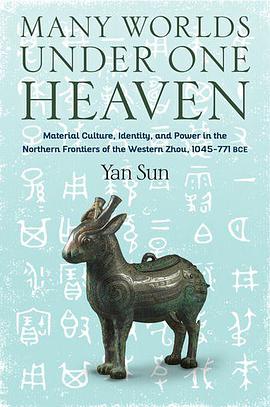
Material Culture, Identity, and Power in the Northern Frontiers of the Western Zhou, 1045–771 BCE
Übersicht
In the mid-eleventh century BCE, the Zhou overthrew the Shang, a dynastic power that had dominated much of northern and central China. Over the next three centuries, they would extend the borders of their political control significantly beyond those of the Shang. The Zhou introduced a political ideology centered on the Mandate of Heaven to justify their victory over the Shang and their territorial expansion, portraying the Zhou king as ruling the frontier from the center of civilization. Present-day scholarship often still adheres to this core-periphery perspective, emphasizing cultural assimilation and political integration during Zhou rule. However, recent archaeological findings present a more complex picture.
Many Worlds Under One Heaven analyzes a wide range of newly excavated materials to offer a new perspective on political and cultural change under the Western Zhou. Examining tombs, bronze inscriptions, and other artifacts, Yan Sun challenges the Zhou-centered view with a frontier-focused perspective that highlights the roles of multiple actors. She reveals the complexity of identity construction and power relations in the northern frontiers of the Western Zhou, arguing that the border regions should be seen as a land of negotiation that witnessed cultural hybridization and experimentation. Rethinking a critical period for the formation of Chinese civilization, Many Worlds Under One Heaven unsettles the core-periphery model to reveal the diversity and flexibility of identity in early China.