Popular Dictatorships
Google Books Douban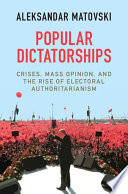
Crises, Mass Opinion, and the Rise of Electoral Authoritarianism
Aleksandar Matovski
Sinossi
Electoral autocracies - regimes that adopt democratic institutions but subvert them to rule as dictatorships - have become the most widespread, resilient and malignant non-democracies today. They have consistently ruled over a third of the countries in the world, including geopolitically significant states like Russia, Turkey, Venezuela, Egypt, Indonesia, Nigeria and Pakistan. Challenging conventional wisdom, Popular Dictators shows that the success of electoral authoritarianism is not due to these regimes' superior capacity to repress, bribe, brainwash and manipulate their societies into submission, but is actually a product of their genuine popular appeal in countries experiencing deep political, economic and security crises. Promising efficient, strong-armed rule tempered by popular accountability, elected strongmen attract mass support in societies traumatized by turmoil, dysfunction and injustice, allowing them to rule through the ballot box. Popular Dictators argues that this crisis legitimation strategy makes electoral authoritarianism the most significant threat to global peace and democracy.
contenuti
1. A 'perfect dictatorship?' The puzzle of electoral authoritarianism
2. Crises, popular opinion and electoral authoritarianism
3. Crises, popular opinion and electoral authoritarianism
4. The 'strongman' electoral authoritarian appeal: a comparative analysis
5. Crises, popular opinion and the re-alignment of political competition in Russia
6. Is Russia unique? The strongman heresthetic in comparative perspective
7. Conclusions and implications
Bibliography
Index