Otaku and the Struggle for Imagination in Japan
Douban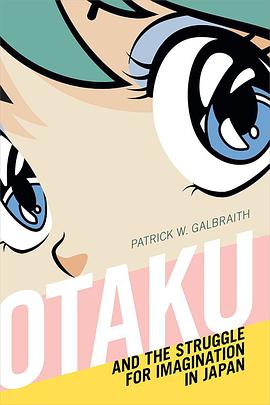
Patrick W. Galbraith
résumé
From computer games to figurines and maid cafes, men called “otaku” develop intense fan relationships with “cute girl” characters from manga, anime, and related media and material in contemporary Japan. While much of the Japanese public considers the forms of character love associated with “otaku” to be weird and perverse, the Japanese government has endeavored to incorporate “otaku” culture into its branding of “Cool Japan.” In Otaku and the Struggle for Imagination in Japan, Patrick W. Galbraith explores the conflicting meanings of “otaku” culture and its significance to Japanese popular culture, masculinity, and the nation. Tracing the history of “otaku” and “cute girl” characters from their origins in the 1970s to his recent fieldwork in Akihabara, Tokyo (“the Holy Land of Otaku”), Galbraith contends that the discourse surrounding “otaku” reveals tensions around contested notions of gender, sexuality, and ways of imagining the nation that extend far beyond Japan. At the same time, in their relationships with characters and one another, “otaku” are imagining and creating alternative social worlds.
contenus
Dedication / Acknowledgments ix
Introduction. "Otaku" and the Struggle for Imagination in Japan 1
1. Seeking an Alternative: "Male Sojo Fans since the 1970s 20
2. "Otaku" Research and Reality Problems 49
3. Moe: An Affective Response to Fictional Characters 76
4. Akihabara: "Otaku" and Contested Imaginaries in Japan 127
5. Maid Cafés: Relations with Fictional and Real Others in Spaces Between 184
Conclusion. Eshi 100: The Politics of Japanese, "Otaku," Popular Culture in Akihabara and Beyond 227
Notes 261
Bibliography 289
Index 311