Prophets and Ghosts
Douban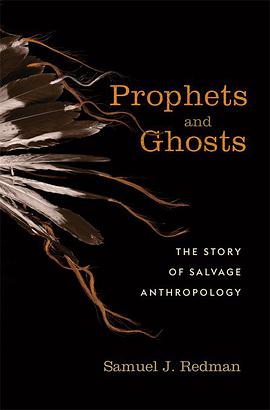
The Story of Salvage Anthropology
Samuel J. Redman
Sinossi
A searching account of nineteenth-century salvage anthropology, an effort to preserve the culture of “vanishing” Indigenous peoples through dispossession of the very communities it was meant to protect.
In the late nineteenth century, anthropologists, linguists, archaeologists, and other chroniclers began amassing Indigenous cultural objects—crafts, clothing, images, song recordings—by the millions. Convinced that Indigenous peoples were doomed to disappear, collectors donated these objects to museums and universities that would preserve and exhibit them. Samuel Redman dives into the archive to understand what the collectors deemed the tradition of the “vanishing Indian” and what we can learn from the complex legacy of salvage anthropology.
The salvage catalog betrays a vision of Native cultures clouded by racist assumptions—a vision that had lasting consequences. The collecting practice became an engine of the American museum and significantly shaped public education and preservation, as well as popular ideas about Indigenous cultures. Prophets and Ghosts teases out the moral challenges inherent in the salvage project. Preservationists successfully maintained an important human inheritance, sometimes through collaboration with Indigenous people, but collectors’ methods also included outright theft. The resulting portrait of Indigenous culture reinforced the public’s confidence in the hierarchies of superiority and inferiority invented by “scientific” racism.
Today the same salvaged objects are sources of invaluable knowledge for researchers and museum visitors. But the question of what should be done with such collections is nonetheless urgent. Redman interviews Indigenous artists and curators, who offer fresh perspectives on the history and impact of cultural salvage, pointing to new ideas on how we might contend with a challenging inheritance.
contenuti
Prologue
1. The Birth of Salvage Anthropology in the Nineteenth Century
2. Building a Cultural Salvage Movement in the United States
3. The Federal Government and Salvage Anthropology
4. Salvaging Society through Art and Image
5. Cultural Salvage in California
6. Salvage Anthropology in the Modern World
Epilogue
Notes
Acknowledgments
Index