The Empty Seashell
谷歌圖書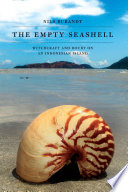
Witchcraft and Doubt on an Indonesian Island
Nils Bubandt
簡介
The Empty Seashell explores what it is like to live in a world where cannibal witches are undeniably real, yet too ephemeral and contradictory to be an object of belief. In a book based on more than three years of fieldwork between 1991 and 2011, Nils Bubandt argues that cannibal witches for people in the coastal, and predominantly Christian, community of Buli in the Indonesian province of North Maluku are both corporeally real and fundamentally unknowable. Witches (known as gua in the Buli language or as suanggi in regional Malay) appear to be ordinary humans but sometimes, especially at night, they take other forms and attack people in order to kill them and eat their livers. They are seemingly everywhere and nowhere at the same time. The reality of gua, therefore, can never be pinned down. The title of the book comes from the empty nautilus shells that regularly drift ashore around Buli village. Convention has it that if you find a live nautilus, you are a gua. Like the empty shells, witchcraft always seems to recede from experience.Bubandt begins the book by recounting his own confusion and frustration in coming to terms with the contradictory and inaccessible nature of witchcraft realities in Buli. A detailed ethnography of the encompassing inaccessibility of Buli witchcraft leads him to the conclusion that much of the anthropological literature, which views witchcraft as a system of beliefs with genuine explanatory power, is off the mark. Witchcraft for the Buli people doesn’t explain anything. In fact, it does the opposite: it confuses, obfuscates, and frustrates. Drawing upon Jacques Derrida’s concept of aporia—an interminable experience that remains continuously in doubt—Bubandt suggests the need to take seriously people’s experiential and epistemological doubts about witchcraft, and outlines, by extension, a novel way of thinking about witchcraft and its relation to modernity.