Creditworthy
Douban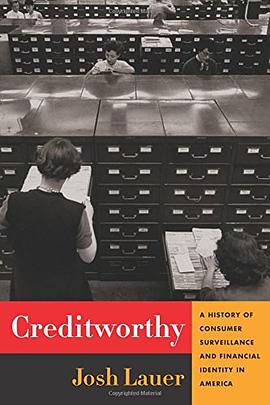
Josh Lauer
résumé
The first consumer credit bureaus appeared in the 1870s and quickly amassed huge archives of deeply personal information. Today, the three leading credit bureaus are among the most powerful institutions in modern life—yet we know almost nothing about them. Experian, Equifax, and TransUnion are multi-billion-dollar corporations that track our movements, spending behavior, and financial status. This data is used to predict our riskiness as borrowers and to judge our trustworthiness and value in a broad array of contexts, from insurance and marketing to employment and housing.
In Creditworthy, the first comprehensive history of this crucial American institution, Josh Lauer explores the evolution of credit reporting from its nineteenth-century origins to the rise of the modern consumer data industry. By revealing the sophistication of early credit reporting networks, Creditworthy highlights the leading role that commercial surveillance has played—ahead of state surveillance systems—in monitoring the economic lives of Americans. Lauer charts how credit reporting grew from an industry that relied on personal knowledge of consumers to one that employs sophisticated algorithms to determine a person's trustworthiness. Ultimately, Lauer argues that by converting individual reputations into brief written reports—and, later, credit ratings and credit scores—credit bureaus did something more profound: they invented the modern concept of financial identity. Creditworthy reminds us that creditworthiness is never just about economic "facts." It is fundamentally concerned with—and determines—our social standing as an honest, reliable, profit-generating person.
contenus
Acknowledgments
Introduction
1. “A Bureau for the Promotion of Honesty”: The Birth of Systematic Credit Surveillance
2. Coming to Terms with Credit: The Nineteenth- Century Origins of Consumer Credit Surveillance
3. Credit Workers Unite: Professionalization and the Rise of a National Credit Infrastructure
4. Running the Credit Gantlet: Extracting, Ordering, and Communicating Consumer Information
5. “You Are Judged by Your Credit”: Teaching and Targeting the Consumer
6. “File Clerk’s Paradise”: Postwar Credit Reporting on the Eve of Automation
7. Encoding the Consumer: The Computerization of Credit Reporting and Credit Scoring
8. Database Panic: Computerized Credit Surveillance and Its Discontents
9. From Debts to Data: Credit Bureaus in the New Information Economy
Epilogue
Notes
Selected Bibliography
Index