The Transformative Power of Language: From Postcolonial to Knowledge Societies in Africa
Douban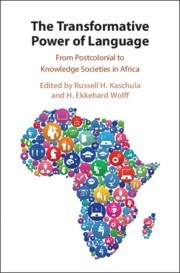
overblik
Language has played a pivotal role in societal transformation in postcolonial Africa towards the creation of globally competitive knowledge societies; however so far, this role has been under-researched and under-estimated. This volume addresses this gap in the literature, by bringing together a team of globally-recognised scholars to explore the effect of language on African postcolonial societies, and how it has contributed to achieving 'mental decolonisation'. A range of languages are explored, both imported (ex-colonial) and indigenous African, and case studies from different spheres of public discourse are investigated, from universities to legal settings. Demonstrating that multilingualism is a resource for, rather than barrier to, successful transformation, this book brings the intellectualisation and institutionalisation of African languages to the forefront of development discourse, and provides an insightful snap-shot of how current academic research, public discourse, political activism and social community engagement have contributed to societal transformation in South Africa.Language has played a pivotal role in societal transformation in postcolonial Africa towards the creation of globally competitive knowledge societies; however so far, this role has been under-researched and under-estimated. This volume addresses this gap in the literature, by bringing together a team of globally-recognised scholars to explore the effect of language on African postcolonial societies, and how it has contributed to achieving 'mental decolonisation'. A range of languages are explored, both imported (ex-colonial) and indigenous African, and case studies from different spheres of public discourse are investigated, from universities to legal settings. Demonstrating that multilingualism is a resource for, rather than barrier to, successful transformation, this book brings the intellectualisation and institutionalisation of African languages to the forefront of development discourse, and provides an insightful snap-shot of how current academic research, public discourse, political activism and social community engagement have contributed to societal transformation in South Africa.