Casualties of Credit
Douban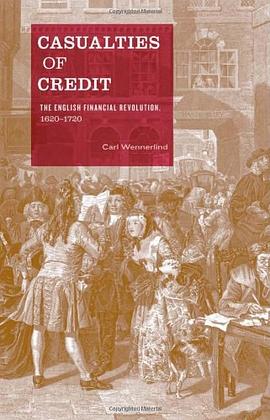
The English Financial Revolution, 1620-1720
Carl Wennerlind
résumé
Modern credit, developed during the financial revolution of 1620¬--1720, laid the foundation for England's political, military, and economic dominance in the eighteenth century. Possessed of a generally circulating credit currency, a modern national debt, and sophisticated financial markets, England developed a fiscal-military state that instilled fear in its foes and facilitated the first industrial revolution. Yet a number of casualties followed in the wake of this new system of credit. Not only was it precarious and prone to accidents, but it depended on trust, public opinion, and ultimately violence. Carl Wennerlind reconstructs the intellectual context within which the financial revolution was conceived. He traces how the discourse on credit evolved and responded to the Glorious Revolution, the Scientific Revolution, the founding of the Bank of England, the Great Recoinage, armed conflicts with Louis XIV, the Whig-Tory party wars, the formation of the public sphere, and England's expanded role in the slave trade. Debates about credit engaged some of London's most prominent turn-of-the-century intellectuals, including Daniel Defoe, John Locke, Isaac Newton, Jonathan Swift and Christopher Wren. Wennerlind guides us through these conversations, toward an understanding of how contemporaries viewed the precariousness of credit and the role of violence--war, enslavement, and executions--in the safeguarding of trust.