The Government Next Door
Douban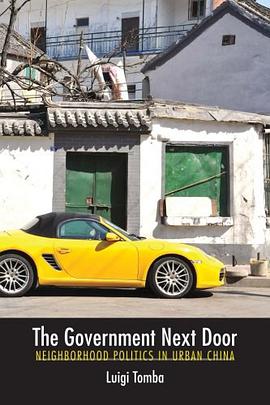
Neighborhood Politics in Urban China
Luigi Tomba
visão geral
Chinese residential communities are places of intense governing and an arena of active political engagement between state and society. In The Government Next Door, Luigi Tomba investigates how the goals of a government consolidated in a distant authority materialize in citizens' everyday lives. Chinese neighborhoods reveal much about the changing nature of governing practices in the country. Government action is driven by the need to preserve social and political stability, but such priorities must adapt to the progressive privatization of urban residential space and an increasingly complex set of societal forces. Tomba’s vivid ethnographic accounts of neighborhood life and politics in Beijing, Shenyang, and Chengdu depict how such local "translation" of government priorities takes place.
Tomba reveals how different clusters of residential space are governed more or less intensely depending on the residents’ social status; how disgruntled communities with high unemployment are still managed with the pastoral strategies typical of the socialist tradition, while high-income neighbors are allowed greater autonomy in exchange for a greater concern for social order. Conflicts are contained by the gated structures of the neighborhoods to prevent systemic challenges to the government, and middle-class lifestyles have become exemplars of a new, responsible form of citizenship. At times of conflict and in daily interactions, the penetration of the state discourse about social stability becomes clear.
conteúdo
Introduction: The Neighborhood Consensus
1. Social Clustering: Neighborhoods and the Governing of Social Distinction
2. Micro-Governing the Urban Crisis
3. Housing and Social Engineering
4. Contained Contention: Interests, Places, Community, and the State
5. A Contagious Civilization: Community, Exemplarism, and Suzhi
Conclusion: Arenas of Contention and Accommodation
Notes
Bibliography
Index