Glorify the Empire
Douban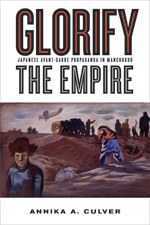
Japanese Avant-Garde Propaganda in Manchukuo
Annika A. Culver
Overview
In the 1930s and '40s, Japanese political architects of the Manchukuo project in occupied northeast China realized the importance of using various cultural media to promote a modernization program in the region, as well as its expansion into other parts of Asia. Ironically, the writers and artists chosen to spread this imperialist message had left-wing political roots in Japan, where their work strongly favoured modernist, even avant-garde, styles of expression.
In Glorify the Empire, Annika Culver explores how these once anti-imperialist intellectuals produced modernist works celebrating the modernity of a fascist state and reflecting a complicated picture of complicity with, and ambivalence towards, Japan's utopian project. During the war, literary and artistic representations of Manchuria accelerated, and the Japanese-led culture in Manchukuo served as a template for occupied areas in Southeast Asia. A groundbreaking work, Glorify the Empire magnifies the intersection between politics and art in a rarely examined period in Japanese history.
contents
List of Figures
Acknowledgments
Introduction: Propaganda in the Manchukuo Context, 1932-45
1 Laying the Groundwork for the Japanese Avant-Garde Propagandists
2 Literature in Service of the State: Yamada Seizaburô and Right-Wing Proletarianism, 1931-43
3 Surrealism in Service of the State: Fukuzawa Ichirô and Associates, 1935-36
4 The Lure of Artistic Vision and Commercial Prerogative: Ai Mitsu and the Burden of Representation, 1935 and 1943
5 Reflections of Labour and the Construction of the New State: Fuchikami Hakuyô and Manchuria Graph, 1933-41
6 The Manchukuo Publicity and News Bureau’s War of Words and Images: Mutô Tomio and the Discourse of Culture, 1938-43
7 The Legitimization of a Multi-Ethnic Literary Culture in Manchukuo: Kawabata Yasunari's Promotion of Manchurian Literature, 1941-44
Conclusion: The Reflected Utopia Darkens: Manchukuo, Imperial Japan's Surrender, and Postwar Issues
Notes
Bibliography
Index