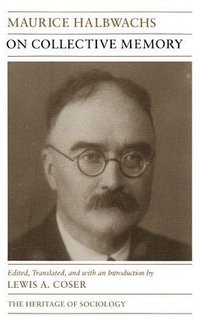
On Collective Memory
Douban
Maurice Halbwachs Coser, Lewis A
sinopsis
How do we use our mental images of the present to reconstruct our past? Maurice Halbwachs (1877-1945) addressed this question for the first time in his work on collective memory, which established him as a major figure in the history of sociology. This volume, the first comprehensive English- language translation of Halbwach's writings on the social construction of memory, fills a major gap in the literature on the sociology of knowledge. Halbwachs' primary thesis is that human memory can only function within a collective context. Collective memory, Halbwachs asserts, is always selective; various groups of people have different collective memories, which in turn give rise to different modes of behavior. Halbwachs shows, for example, how pilgrims to the Holy Land over the centuries evoked very different images of the events of Jesus' life; how wealthy old families in France have a memory of the past that diverges sharply from that of the nouveaux riches; and how working class constructions of reality differ from those of their middle-class counterparts. With a detailed introduction by Lewis A. Coser, this translation will be an indispensable source for new research in historical sociology and cultural memory. Lewis A. Coser is Distinguished Professor of Sociology Emeritus at the State University of New York and Adjunct Professor of Sociology at Boston College. The Heritage of Sociology series
contenidos
Acknowledgments
Introduction: Maurice Halbwachs 1877-1945
I. The Social Frameworks of Memory
Preface
1. Dreams and Memory Images
2. Language and Memory
3. The Reconstruction of the Past
4. The Localization of Memories
5. The Collective Memory of the Family
6. Religious Collective Memory
7. Social Classes and Their Traditions
8. Conclusion
II. The Legendary Topography of the Gospels in the Holy Land
Conclusions
Index