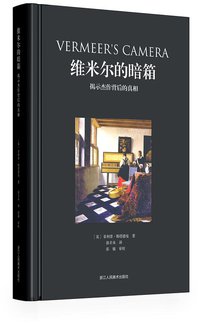
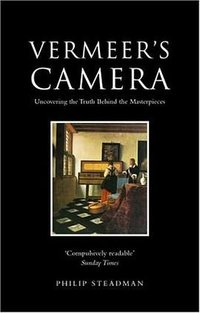
Vermeer's Camera
Douban
Uncovering the Truth Behind the Masterpieces
Philip Steadman
Sinossi
Over 100 years of speculation and controversy surround claims that the great 17th-century Dutch artist, Johannes Vermeer, used the camera obscura to create some of the most famous images in Western art. This intellectual detective story starts by exploring Vermeer's possible knowledge of 17th-century optical science, and outlines the history of this early version of the photographic camera, which projected an accurate image for artists to trace. However, it is Steadman's meticulous reconstruction of the artist's studio, complete with a camera obscura, which provides exciting new evidence to support the view that Vermeer did indeed use the camera. These findings do not challenge Vermeer's genius but show how, like many artists, he experimented with new technology to develop his style and choice of subject matter. The combination of detailed research and a wide range of contemporary illustrations offers a fascinating glimpse into a time of great scientific and cultural innovation and achievement in Europe.
contenuti
Introduction.
1: The camera obscura.
2: The discovery of Vermeer's use of the camera.
3: Who taught Vermeer about optics?.
4: A room in Vermeer's house?.
5: Reconstructing the spaces in Vermeer's paintings.
6: The riddle of the Sphinx of Delft.
7: More evidence, from rebuilding Vermeer's studio.
8: Arguments against Vermeer's use of the camera.
9: The influence of the camera on Vermeer's painting style. Appendices.
Further Reading.
A. Architectural features appearing in Vermeer's interiors.
B. Measurements of Vermeer's room and furniture