Elite Parties, Poor Voters
Douban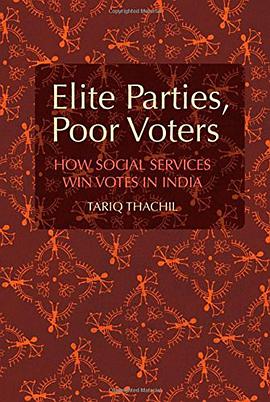
How Social Services Win Votes in India
Tariq Thachil
résumé
Why do poor people often vote against their material interests? This puzzle has been famously studied within wealthy Western democracies, yet the fact that the poor voter paradox also routinely manifests within poor countries has remained unexplored. This book studies how this paradox emerged in India, the world's largest democracy. Tariq Thachil shows how arguments from studies of wealthy democracies (such as moral values voting) and the global south (such as patronage or ethnic appeals) cannot explain why poor voters in poor countries support parties that represent elite policy interests. He instead draws on extensive survey data and fieldwork to document a novel strategy through which elite parties can recruit the poor, while retaining the rich. He shows how these parties can win over disadvantaged voters by privately providing them with basic social services via grassroots affiliates. Such outsourcing permits the party itself to continue to represent the policy interests of their privileged base.
Extends the study of why poor citizens vote against their interests to the non-Western world
The first book to provide a theory of social services as an electoral strategy, explaining why parties use social services for electoral purposes, how services win votes, and when this strategy succeeds or fails
Offers a comparison of religious parties across a diverse set of cases (India, Egypt, Yemen and Indonesia)
contenus
1. Introduction
2. An elite party's struggles with poor voters
3. Why rich and poor voters support an elite party in India
4. Why an elite party turned to service
5. How service wins votes
6. When service fails: the impact of rival strategies
7. The argument in comparative perspective
8. Conclusion
Appendix A. Variables, sources, and summary statistics
Appendix B. Additional tables and figures
Appendix C. Supplemental survey information
Appendix D. List of information in online supplement.