Exotic Commodities
Douban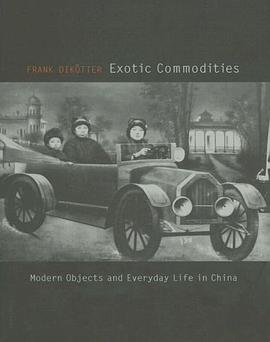
Modern Objects and Everyday Life in China
résumé
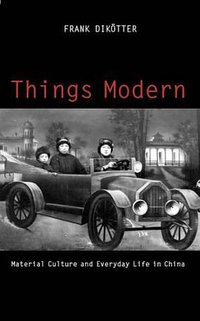
Exotic Commodities is the first book to chart the consumption and spread of foreign goods in China from the mid-nineteenth century to the advent of communism in 1949. Richly illustrated and revealing, this volume recounts how exotic commodities were acquired and adapted in a country commonly believed to have remained "hostile toward alien things" during the industrial era.
China was not immune to global trends that prized the modern goods of "civilized" nations. Foreign imports were enthusiastically embraced by both the upper and lower classes and rapidly woven into the fabric of everyday life, often in inventive ways. Scarves, skirts, blouses, and corsets were combined with traditional garments to create strikingly original fashions. Industrially produced rice, sugar, wheat, and canned food revolutionized local cuisine, and mass produced mirrors were hung on doorframes to ward off malignant spirits.
Frank Dikötter argues that ordinary people were the least inhibited in acquiring these products and therefore the most instrumental in changing the material culture of China. Landscape paintings, door leaves, and calligraphy scrolls were happily mixed with kitschy oil paintings and modern advertisements. Old and new interacted in ways that might have seemed incongruous to outsiders but were perfectly harmonious to local people.
This pragmatic attitude would eventually lead to China's own mass production and export of cheap, modern goods, which today can be found all over the world. The nature of this history raises the question, which Dikötter pursues in his conclusion: If the key to surviving in a fast-changing world is the ability to innovate, could China be more in tune with modernity than Europe?
contenus
Acknowledgments
Illustrations and Credits
Conventions
1. Introduction
Part I. Dissemination: Networks and Materials
2. The Domestication of Foreign Goods
3. The Dissemination of New Objects
4. From Water to Wheel
5. Changing Cityscapes
6. Electricity, Telephone and Water
Part II. Appropriation: People and Objects
7. Dwelling
8. Clothing and Grooming
9. Eating and Drinking
10. Seeing and Listening
Conclusion
Notes
Bibliography
Index