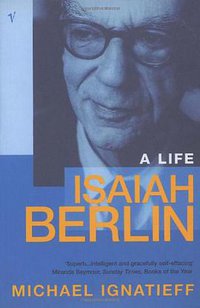
Isaiah Berlin
Douban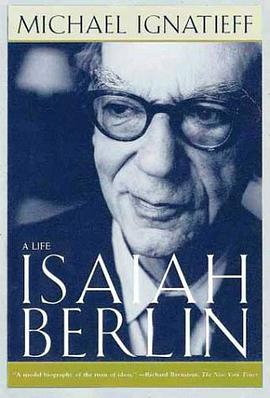
A Life
Michael Ignatieff
overblik
Amazon.com Review
Russian by birth, Jewish by descent, English by choice, Isaiah Berlin (1909-97) knit together three identities into a cosmopolitan sensibility that informed his contributions as one of the 20th century's most influential and important intellectuals. Based on his experiences as a child during the Russian Revolution and his friendships with such beleaguered writers as Boris Pasternak and Anna Akhmatova, Berlin affirmed the superiority of individual freedom and judgment to Marxist totalitarianism. But he made fellow liberals uncomfortable with his unwelcome reminders that their ideals--liberty, equality, social justice--inevitably conflicted and required painful tradeoffs. London-based journalist Michael Ignatieff, who spent 10 years interviewing Berlin before his death, adeptly captures an appealing man: lighthearted, spontaneous, a brilliant conversationalist and lecturer (one of Oxford University's most popular professors), able to savor private happiness despite an essentially tragic view of political life. Ignatieff admires Berlin's views without accepting them uncritically; similarly, he acknowledges personal failings while appreciating the serenity Berlin achieved against considerable odds. This lucidly written, thoughtfully argued work is a model of the well-balanced biography, carefully evaluating the complex interplay of character and conviction in one remarkable individual. --Wendy Smith --This text refers to an out of print or unavailable edition of this title.
From Publishers Weekly
Over the last 10 years of Isaiah Berlin's life (1909-1997), Ignatieff tape-recorded conversations with the philosopher in what he describes as "a virtuoso display of a great intelligence doing battle with loss." Because this biography is based primarily on these talks?as well as on interviews with Berlin's widow, friends, students and colleagues?the tone is informally conversational rather than pedantically authoritative. After a prosperous childhood in Latvia, Berlin's family was forced to move to London, where young Isaiah absorbed the British values of decency, the toleration of dissent and the importance of liberty over efficiency. At Oxford, he developed intellectually under the likes of Stephen Spender, W.H. Auden, R.G. Collingwood, Elizabeth Bowen and Virginia Woolf. Berlin did well at Oxford?he was elected Tutor at New College, Fellow of All Souls?but with war coming, he welcomed a chance to work for the Ministry of Information, first in the U.S., where his brilliant wartime dispatches (avidly read by Churchill) established his reputation in both Britain and America, and later as part of a Foreign Office team in Moscow (where he met Boris Pasternak) and Leningrad (where he began his transformative friendship with Anna Akhmatova). Throughout the book, Ignatieff concentrates on his subject's conversation and flow of ideas. Berlin championed freedom but not dogmatically. In his view, to be true to human nature in its diversity, we have to embrace contradictory values; otherwise, we lose our humanity. Ignatieff's biography is worthy of its subject, lucidly explaining how this "Paganini of words" used philosophy to defend civilized society.