Nation and Loyalty in a German-Polish Borderland
Douban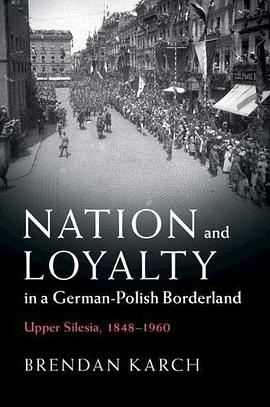
Upper Silesia, 1848–1960
Brendan Karch
résumé
In the bloody twentieth-century battles over Central Europe's borderlands, Upper Silesians stand out for resisting pressure to become loyal Germans or Poles. This work traces nationalist activists' efforts to divide Upper Silesian communities, which were bound by their Catholic faith and bilingualism, into two 'imagined' nations. These efforts, which ranged from the 1848 Revolution to the aftermath of the Second World War, are charted by Brendan Karch through the local newspapers, youth and leisure groups, neighborhood parades, priestly sermons, and electoral outcomes. As locals weathered increasing political turmoil and violence in the German-Polish contest over their homeland, many crafted a national ambiguity that allowed them to pass as members of either nation. In prioritizing family, homeland, village, class, or other social ties above national belonging, a majority of Upper Silesians adopted an instrumental stance towards nationalism. The result was a feedback loop between national radicalism and national skepticism.
contenus
Introduction
1. The battle before: Catholicism and the making of upper Silesians, 1848-1890
2. Nationalism's debut: imagining a Polish community, 1890–1914
3. Breakdown: World War I and the upper Silesian plebiscite, 1914–1921
4. The Weimar gap: democracy and nationalism, 1922–1933
5. Reprieve: Jews between Germany, Poland, and the League of Nations
6. The instrumental Volksgemeinschaft: making 'loyal' Germans, 1933–1944
7. The postwar ultimatum: making 'loyal' Poles after 1945
Epilogue.