The Conditions of Agricultural Growth
豆瓣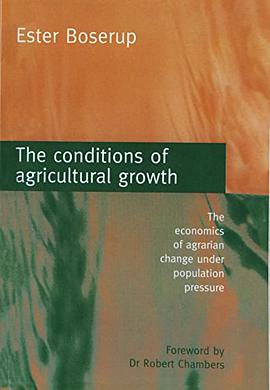
The Economics of Agrarian Change Under Population Pressure
Ester Boserup
简介
When it first appeared in 1965, The Conditions of Agricultural Growth heralded a breakthrough in the theory of agricultural development. Whereas 'development' had previously been seen as the transformation of traditional communities by the introduction (or imposition) of new technologies, Ester Boserup argued that changes and improvements occur from within agricultural communities, and that improvements are governed not only by outside interference, but by those communities themselves. Using extensive analyses of the costs and productivity of the main systems of traditional agriculture, Ester Boserup concludes that technical, economic and social changes are unlikely to take place unless the community concerned is exposed to the pressure of population growth. In sharp contrast to widely accepted ideas, she shows how population growth may be the main stimulus to agrarian change. In developing this theme, the author identifies successive stages of agriculture, characterized by differences in techniques of cultivation and in social structure and show how they can be explained by differences in population density. This book is of relevance not only to economists, but also to historians interested in the way present changes in agrarian communities parallel those of the past.
目录
The Historical Sequence (9)
Land Use in the Tropics (10)
The Changing Landscape (12)
2. THE INTERDEPENDENCE OF LAND USE AND TECHNICAL CHANGE (15)
Fallow Systems and Types of Techniques (15)
Kind of Tool vs. Make of Tool (17)
3. LABOUR PRODUCTIVITY UNDER LONG-FALLOW AND SHORT-FALLOW SY STEMS (20)
From Forest Fallow to Bush Fallow (21)
The Advent of Plough Cultivation (23)
4. CARRYING CAPACITY OF LAND AND PRODUCTIVITY OF LABOUR UNDER INTENSIVE AGRICULTURE (27)
From Natural Grazing to Produced Fodder (28)
From Dry to Irrigated Agriculture (30)
Population Growth and Labour Productivity (32)
5. POPULATION GROWTH AND WORKING HOURS (34)
Short Hours under the Long-Fallow System (35)
The Dead Seasons under the Short-Fallow System (39)
The Hard Toil of Intensive Agriculture (41)
The Gradual Change of Working Habits (43)
6. THE COEXISTENCE OF CULTIVATION SY STEMS (46)
Adaptation of Land Use to Natural Conditions (47)
The Cases of Java and Japan (49)
Reductions of Population Density (51)
Effects of Rapid Population Growth (53)
7. DIMINISHING RETURNS TO LABOUR AND TECHNICAL INERTIA (55)
8. THE VICIOUS CIRCLE OF SPARSE POPULATION AND PRIMITIVE TECHNIQUES (60)
Preconditions for the concentration of population (62)
Divergent patterns of agriculture (64)
9. SYSTEM OF LAND USE AS A DETERMINANT OF LAND TENURE (67)
General and specific rights of cultivation (69)
The characteristics of landlord tenure (71)
Grazing rights and shortening of fallow periods (75)
From landlord tenure to private property in land (76)
10. INVESTMENT AND TENURE IN TRIBAL COMMUNITIES (78)
Organization of investment under tribal tenure (79)
Contest over property rights (80)
11. RURUAL INVESTMENT UNDER LANDLORD TENURE (84)
Intensive agriculture with feudal landlords (85)
The neglect of investment under colonial rule (86)
The response to price incentives (89)
12. INCENTIVES TO INVESTMENT UNDER MODERN TENURE (91)
Investment under family farming (93)
Real wages and employment (95)
Food prices and taxation of agriculture (98)
13. THE USE OF INDUSTRIAL INPUT IN PRIMITIVE AGRICULTURE (101)
14. SOME PERSPECTIVES AND IMPLICATIONS (104)