Capitalism and Confrontation in Sumatra's Plantation Belt, 1870-1979
Douban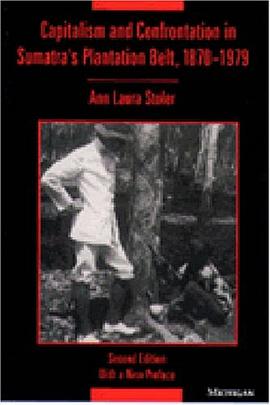
Stoler, Ann Laura
Sinossi
Over the last century, North Sumatra has been the site of one of the most intensive and successful pursuits of foreign agricultural enterprise of any developing country. Colonial expansion by Europeans resulted in overt--sometimes violent-- conflict between capital and labor, as workers resisted plantation interests. "Capitalism and Confrontation in Sumatra's Plantation Belt, 1870-1979" is a fascinating ethnographic history that analyzes how popular resistance actively molded both the form of colonialism and the social, economic, and political experience of the Javanese laboring communities on Sumatra's plantation borders. "A well-crafted and expertly researched history . . . exhibits a brand of intellectual integrity that is rare in a work so critical and this makes it a major contribution to the literature of the impact of imperialism and capitalism on the traditional populations of the Third World." --Peasant Studies "From written historical records, as well as from very broad and intensive field work, Ann Laura Stoler has pieced together an eminently rich and meaningful episode of Indonesian history . . . . What makes for its quality is the remarkable balance, maintained throughout the study, between description, analysis and interpretation."--Pacific Affairs Ann Laura Stoler is Professor of Anthropology and History and Women's Studies, University of Michigan, and the author of "Race and the Education of Desire: A Colonial Reading of Foucault's The History of Sexuality." She is the recipient of the 1992 Harry J. Benda Prize in Southeast Asian Studies from the Association of Asian Studies.