Economic Thought in Modern China
Douban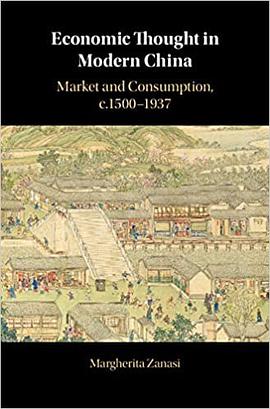
Market and Consumption, c.1500-1937
Margherita Zanasi
visão geral
In this major new study, Margherita Zanasi argues that basic notions of a free market economy emerged in China a century and half earlier than in Europe. In response to the commercial revolutions of the late 1500s, Chinese intellectuals and officials called for the end of state intervention in the market, recognizing its power to self-regulate. They also noted the elasticity of domestic demand and production, arguing in favour of ending long-standing rules against luxury consumption, an idea that emerged in Europe in the late seventeenth and early nineteenth centuries. Zanasi challenges Eurocentric theories of economic modernization as well as the assumption that European Enlightenment thought was unique in its ability to produce innovative economic ideas. She instead establishes a direct connection between observations of local economic conditions and the formulation of new theories, revealing the unexpected flexibility of the Confucian tradition and its accommodation of seemingly unorthodox ideas.
Places the development of Chinese economic thought in a comparative/global perspective
Focuses the relationship between economic ideas and economic circumstances to stimulate conversation between economic historians and historians of ideas
Bridges interpretative gaps between the Ming-Qing and Republican period
conteúdos
Introduction
1. The political and intellectual framework: the Minsheng mandate and China's economy of scarcity
2. Efficient markets and productive consumption (1500–1800)
3. Scarcity revisited: population growth, frugality, and self-strengthening (1800–1911)
4. Nation-building, strategic markets, and frugal modernity: the early decades of the Republic of China (1912–1930s)
Conclusion.