A History of the Modern Fact
Douban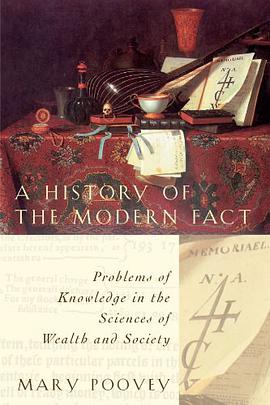
Problems of Knowledge in the Sciences of Wealth and Society
Mary Poovey
Sinossi
Exploring such questions as "how did fact become modernity's most favoured unit of knowledge?", this text contains ideas and texts from the publication of the first British manual on double-entry bookkeeping in 1588 to the institutionalization of statistics in the 1830s. It shows how the production of systematic knowledge from descriptions of observed particulars influenced government; how numerical representation became the privileged vehicle for generating useful facts; and how belief - whether figured as credit, credibility, or credulity - remained essential to the production of knowledge.
contenuti
Acknowledgments
Introduction
1: The Modern Fact, the Problem of Induction, and Questions of Method
2: Accommodating Merchants: Double-Entry Bookkeeping, Mercantile Expertise, and the Effect of Accuracy
3: The Political Anatomy of the Economy: English Science and Irish Land
4: Experimental Moral Philosophy and the Problems of Liberal Governmentality
5: From Conjectural History to Political Economy
6: Reconfiguring Facts and Theory: Vestiges of Providentialism in the New Science of Wealth
7: Figures of Arithmetic, Figures of Speech: The Problem of Induction in the 1830s
Notes
Bibliography
Index