Race for Empire
Douban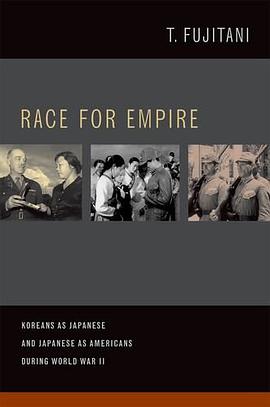
Koreans as Japanese and Japanese as Americans during World War II
Takashi Fujitani
résumé
"Race for Empire" offers a profound and challenging reinterpretation of nationalism, racism, and wartime mobilization during the Asia-Pacific war. In parallel case studies - of Japanese Americans mobilized to serve in the United States Army and of Koreans recruited or drafted into the Japanese military - T. Fujitani examines the U.S. and Japanese empires as they struggled to manage racialized populations while waging total war. Fujitani probes governmental policies and analyzes representations of these soldiers - on film, in literature, and in archival documents - to reveal how characteristics of racism, nationalism, capitalism, gender politics, and the family changed on both sides. He demonstrates that the United States and Japan became increasingly alike over the course of the war, perhaps most tellingly in their common attempts to disavow racism even as they reproduced it in new ways and forms.
contenus
List of Illustrations
Preface and Acknowledgments
Note on Romanization and Naming
Commonly Used Acronyms
Introduction: Ethnic and Colonial Soldiers and the Politics of Disavowal
Part One: From Vulgar to Polite Racism
1. Right to Kill, Right to Make Live: Koreans as Japanese
2. “Very Useful and Very Dangerous”: The Global Politics of Life, Death, and Race
Part Two: Japanese as Americans
3. Subject to Choice, Labyrinth of (Un)freedom
4. Reasoning, Counterreasonings, and Counter-conduct
5. Go for Broke, the Movie: The Transwar Making of American Heroes
Part Three: Koreans as Japanese
6. National Mobilization
7. Nation, Blood, and Self-Determination
8. The Colonial and National Politics of Gender, Sex, and Family
Epilogue: “Four Volunteer Soldiers”
Notes
Selected Bibliography
Index