The Shaping of Middle-Earth
Douban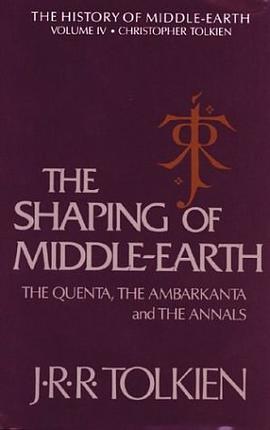
The Quenta, the Ambarkanta and the Annals (The History of Middle-Earth, Vol. 4)
Sinossi
This is the fourth volume of The History of Middle-earth, edited by Christopher Tolkien, the first two comprising The Book of Lost Tales Parts One and Two, and the third The Lays of Beleriand.
It has been given the title The Shaping of Middle-earth because the writings it includes display a great advance in the chronological and geographical structure of the legends of Middle-earth and Valinor. The hitherto wholly unknown "Ambarkanta," or Shape of the World, is the only account ever given of the nature of the imagined Universe, and it is accompanied by diagrams and maps of the world before and after the cataclysms of the War of the Gods and the Downfall of Numenor. The first map of Beleriand, in the North-west of Middle-earth, is also reproduced and discussed. In the "Annals of Valinor" and the "Annals of Beleriand" the chronology of the First Age is given shape; and with these are given the fragments of the translations into Anglo-Saxon made by Aelfwine, the Englishman who voyaged into the True West and came to Tol Eressea, the Lonely Isle, where he learned the ancient history of Elves and Men.
Also included are the original "Silmarillion," written in 1926, from which all the later development proceeded, and the "Quenta Noldorinwa" of 1930, the only version of the myths and legends of the First Age that J.R.R. Tolkien completed to their end. As Christopher Tolkien continues editing the unpublished papers that form the bedrock from which The Lord of the Rings and The Silmarillion were quarried, the vastness of his father's accomplishment becomes even more extraordinary.