Love and Romance in China: From Comrades and Partners to AI Lovers
Goodreads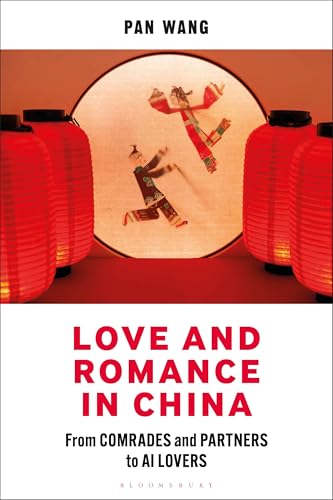
Pan Wang
Sinossi
Love and Romance in China
examines love, affection, and emotions in China from Maoist to contemporary China, focusing on the intersections with politics, economics, gender, class, race and technology.
From the founding of the People's Republic of China to the end of the Cultural Revolution, political ideology and class struggle dominated everyday life, and love was subordinated to the communist revolution and socialism. During the Cultural Revolution, this turbulent period witnessed the paradoxical existence of self-abstinence and self-indulgence. Since China changed its political ideology in 1979 and shifted to a market-oriented economy, the country embraced the idea of romantic love. This “emotional turn” fostered opportunities for diverse intimate relationships characterized by the growth of cross-cultural love, LGBTQI+ love, and the emergence of a “sexual revolution” (Zhang 2011; Jeffreys and Yu 2015). The new dynamic was linked to contested discourses of (fantasised, eroticized, and racialized) foreign love intertwined with nationalist sentiments and ongoing tensions between sexual minorities and the government. The new millennium has witnessed love crises characterised by growing concerns about “leftover” men and women, high divorce rates, declining marriage and birth rates, and other relationship problems. The deepening of the market economy and technological advances have turned love into a “fast food” commodity for mass consumption, manifested in dating shows, digital platforms and intimacy between humans and AI/dolls.
Wang draws on a wide range of texts, including government statistics on marriages and divorces, legal documents, Maoist folk songs, poems, posters, love letters, media texts, popular discourses, online dating websites, and ethnographic observations and interviews.