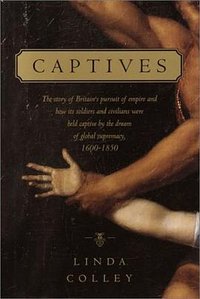
Captives
Douban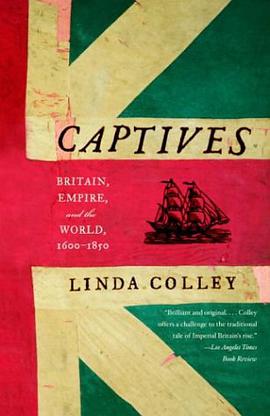
Britain, Empire, and the World, 1600-1850
Linda Colley
visão geral
From Publishers Weekly
Colley (Britons: Forging the Nation, 1707-1837) brilliantly marshals an array of captivity narratives by everyday Britons captured by foreign powers to show the dizzying ethnic and cultural complexity of empire. She considers four zones of the British Empire-the Mediterranean, North America, India and Afghanistan-between the years 1600 and 1850. For reasons of size, population and geography, Britain couldn't run its empire alone. In India and the Mediterranean, for example, collaboration and accommodation with indigenous groups was the rule; most "British" troops in India were native-born sepoys. And over two and a half centuries, tens of thousands of Britons were taken captive by foreigners. In North America, settlers were seized by Native Americans; sailors were sold into slavery by Barbary (North African) corsairs. Colley describes how these captives handled painful encounters with the "other." To a surprising degree, she shows, captives learned to adapt to, and accommodate, a vastly different cultural milieu. Colley also provides an original account of the Revolutionary War, showing how captivity narratives became part of the propaganda war. In India, most British captives were soldiers taken in battle. These Indian narratives "served to personalize overseas and imperial events" to the larger British public.
From The New Yorker
The story of the British Empire has often been told as a steady, irresistible rise. Colley, however, shows how complex and uncertain that rise really was by examining the lives of the hundreds of thousands of Britons taken captive in America, North Africa, and India between 1600 and 1850. Captives embodied the costs of empire and the possibility of failure. Many of them came from the lower classes—a reminder of the fact that those who built the imperial edifice were usually not its prime beneficiaries. Often, they spent years living in—and even accommodating themselves to—foreign cultures, underscoring the fact that the Empire always depended as much upon negotiation and collaboration with local peoples as upon sheer force. Colley's final, provocative suggestion is that it wasn't just the actual hostages who were held captive but, rather, all Britons who found themselves in empire's thrall.