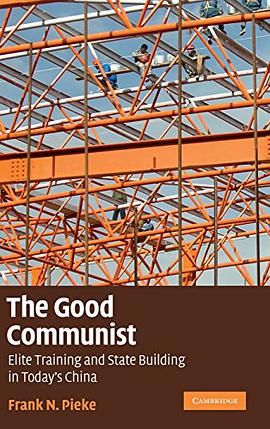
Elite Training and State Building in Today's China
Frank N. Pieke
résumé
Has China become just another capitalist country in a socialist cloak? Will the Chinese Communist Party's rule survive the next ten years of modernization and globalization? Frank Pieke investigates these conundrums in this fascinating account of how government officials are trained for placement in the Chinese Communist Party. Through in-depth interviews with staff members and aspiring trainees, he shows that while the Chinese Communist Party has undergone a radical transformation since the revolutionary years under Mao, it is still incumbent upon cadres, who are selected through a highly rigorous process, to be ideologically and politically committed to the party. It is the lessons learnt through their teachers that shape the political and economic decisions they will make in power. The book offers unique insights into the structure and the ideological culture of the Chinese government, and how it has reinvented itself over the last three decades as a neo-socialist state.
contenus
Preface
1. Socialism, capitalism and the anthropology of neo-socialist rule
2. Cadres, cadre training and party schools
3. Cadre education and training in the twenty-first century
4. Life and work at party schools
5. Marketization and centralization of cadre education and training
6. Cadre training, cadre careers and the changing composition of China's political elite
7. Conclusions: cadre training and the future of party rule
Appendix 1. List of interviewees
Appendix 2. Questionnaire survey
Appendix 3. Glossary of Chinese terms
References.