Epistemology
Douban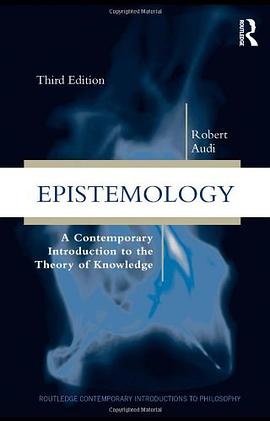
A Contemporary Introduction to the Theory of Knowledge
Robert Audi
sinopsis
Epistemology, or "the theory of knowledge," is concerned with how we know what we know, what justifies us in believing what we believe, and what standards of evidence we should use in seeking truths about the world and human experience. This comprehensive introduction to the field of epistemology explains the concepts and theories central to understanding knowledge. Along with covering the traditional topics of the discipline in detail, Epistemology explores emerging areas of research. The third edition features new sections on such topics as the nature of intuition, the skeptical challenge of rational disagreement, and "the value problem" - the range of questions concerning why knowledge and justified true belief have value beyond that of merely true belief. Updated and expanded, Epistemology remains a superb introduction to one of the most fundamental fields of philosophy. Special features of the third edition of Epistemology include: a comprehensive survey of basic concepts, major theories, and emerging research in the field enhanced treatment of key topics such as contextualism, perception (including perceptual content), scientific hypotheses, self-evidence and the a priori, testimony, understanding, and virtue epistemology expanded discussion of the relation between epistemology and related fields, especially philosophy of mind, philosophy of science, and ethics increased clarity and ease of understanding for an undergraduate audience an updated list of key literature and annotated bibliography.
contenidos
Preface
Introduction
Part 1: Sources of Justification, Knowledge, and Truth
1. Perception: Sensing, Believing, and Knowing
2. Theories of Perception: Sense Experience, Appearances, and Reality
3. Memory
4. Consciousness: The Life of the Mind
5. Reason I: Understanding, Insight, and Intellectual Power
6. Reason II: Apriority, Necessity, and Provability
7. Testimony
Part 2: The Structure and Growth of Justification and Knowledge
8. Inference and the Extension of Knowledge
9. The Architecture of Knowledge
Part 3: The Nature and Scope of Justification and Knowledge
10. The Analysis of Knowledge: Justification, Certainty, and Reliability
11. Knowledge, Justification and Truth: Internalism, Externalism, and Intellectual Virtue
12. Scientific, Moral, and Religious Knowledge
13. Skepticism I: The Quest for Certainty
14. Skepticism II: The Defense of Common Sense in the Face of Fallibility
15. Conclusion
Annotated Bibliography
Index