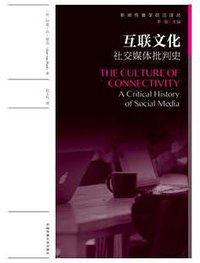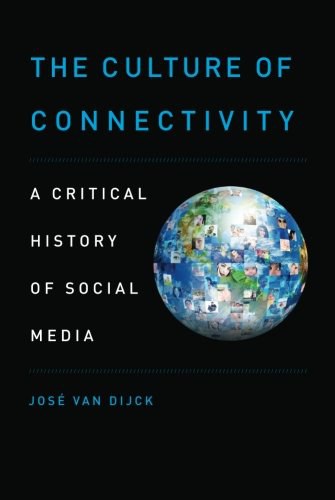
A Critical History of Social Media
Jose van Dijck
sinopsis
Social media has come to deeply penetrate our lives: Facebook, YouTube, Twitter and many other platforms define many of our daily habits of communication and creative production. The Culture of Connectivity studies the rise of social media in the first decade of the twenty-first century up until 2012, providing both a historical and a critical analysis of the emergence of major platforms in the context of a rapidly changing ecosystem of connective media. Such history is needed to understand how these media have come to profoundly affect our experience of online sociality. The first stage of their development shows a fundamental shift. While most sites started out as amateur-driven community platforms, half a decade later they have turned into large corporations that do not just facilitate user connectedness, but have become global information and data mining companies extracting and exploiting user connectivity. Author and media scholar Jose van Dijck offers an analytical prism to examine techno-cultural as well as socio-economic aspects of this transformation. She dissects five major platforms: Facebook, Twitter, Flickr, YouTube, and Wikipedia. Each of these microsystems occupies a distinct position in the larger ecology of connective media, and yet, their underlying mechanisms for coding interfaces, steering users, and filtering content rely on shared ideological principles. At the level of management and organization, we can also observe striking similarities between these platforms' shifting ownership status, governance strategies, and business models. Reconstructing the premises on which these platforms are built, this study highlights how norms for online interaction and communication gradually changed. "Sharing," "friending," "liking," "following," "trending," and "favoriting" have come to denote online practices imbued with specific technological and economic meanings. This process of normalization, the author argues, is part of a larger political and ideological battle over information control in an online world where everything is bound to become social. Crossing lines of technological, historical, sociological, and cultural inquiry, The Culture of Connectivity will reshape the way we think about interpersonal connection in the digital age.