Set-Theoretic Methods for the Social Sciences
Douban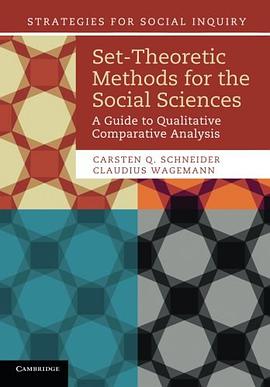
Carsten Q. Schneider
visão geral
Qualitative Comparative Analysis (QCA) and other set-theoretic methods distinguish themselves from other approaches to the study of social phenomena by using sets and the search for set relations. In virtually all social science fields, statements about social phenomena can be framed in terms of set relations, and using set-theoretic methods to investigate these statements is therefore highly valuable. This book guides readers through the basic principles of set theory and then on to the applied practices of QCA. It provides a thorough understanding of basic and advanced issues in set-theoretic methods together with tricks of the trade, software handling and exercises. Most arguments are introduced using examples from existing research. The use of QCA is increasing rapidly and the application of set-theory is both fruitful and still widely misunderstood in current empirical comparative social research. This book provides the comprehensive guide to these methods for researchers across the social sciences.
conteúdo
Introduction;
Part I. Set-Theoretic Methods: The Basics:
1. Sets, set membership, and calibration;
2. Notions and operations in set theory;
3. Set relations;
4. Truth tables;
Part II. Neat Formal Logic Meets Noisy Social Science Data:
5. Parameters of fit;
6. Limited diversity and logical remainders;
7. The truth table algorithm;
Part III. Potential Pitfalls and Suggestions for Solutions:
8. Potential pitfalls in the standard analysis procedure and suggestions for improvement;
9. Potential pitfalls in the analysis of necessity and sufficiency and suggestions for avoiding them;
Part IV. Variants of QCA as a Technique Meet QCA as an Approach:
10. Variants of QCA;
11. Data analysis technique meets set-theoretic approach;
12. Looking back: looking ahead;
Glossary.