Regulating Prostitution in China
Douban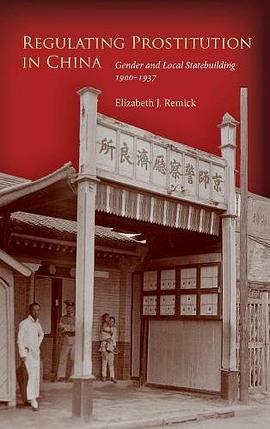
Gender and Local Statebuilding, 1900-1937
Elizabeth J. Remick
overblik
In the early decades of the twentieth century, prostitution was one of only a few fates available to women and girls besides wife, servant, or factory worker. At the turn of the century, cities across China began to register, tax, and monitor prostitutes, taking different forms in different cities. Intervention by way of prostitution regulation connected the local state, politics, and gender relations in important new ways. The decisions that local governments made about how to deal with gender, and specifically the thorny issue of prostitution, had concrete and measurable effects on the structures and capacities of the state.
This book examines how the ways in which local government chose to shape the institution of prostitution ended up transforming local states themselves. It begins by looking at the origins of prostitution regulation in Europe and how it spread from there to China via Tokyo. Elizabeth Remick then drills down into the different regulatory approaches of Guangzhou (revenue-intensive), Kunming (coercion-intensive), and Hangzhou (light regulation). In all three cases, there were distinct consequences and implications for statebuilding, some of which made governments bigger and wealthier, some of which weakened and undermined development. This study makes a strong case for why gender needs to be written into the story of statebuilding in China, even though women, generally barred from political life at that time in China, were not visible political actors.