Constitutional Theory
Douban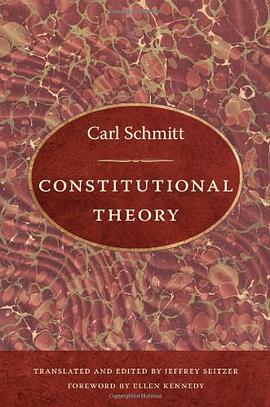
Carl Schmitt Jeffrey Seitzer
Sinossi
Carl Schmitt's magnum opus, "Constitutional Theory", was originally published in 1928 and has been in print in German ever since. This volume makes Schmitt's masterpiece of comparative constitutionalism available to English-language readers for the first time. Schmitt is considered by many to be one of the most original - and, because of his collaboration with the Nazi party, controversial - political thinkers of the twentieth century. In "Constitutional Theory", Schmitt provides a highly original and provocative interpretation of the Weimar Constitution. At the centre of this interpretation lies his famous argument that the legitimacy of a constitution depends on a sovereign decision of the people. In addition to being subject to long-standing debate among legal and political theorists in Western Europe and the United States, this theory of constitution-making as decision has profoundly influenced constitutional theorists and designers in Asia, Latin America, and Eastern Europe. "Constitutional Theory" is a significant departure from Schmitt's more polemical Weimar-era works not just in terms of its moderate tone. Through a comparative history of constitutional government in Europe and the United States, Schmitt develops an understanding of liberal constitutionalism that makes room for a strong, independent state. This edition includes an introduction by Jeffrey Seitzer and Christopher Thornhill that outlines the cultural, intellectual, and political contexts, in which Schmitt wrote "Constitutional Theory"; points out what is distinctive about the work; examines how it has been received in the postwar era; and considers its larger theoretical ramifications. This volume also contains extensive editorial notes and a translation of the Weimar Constitution.