Catastrophe & Culture
Douban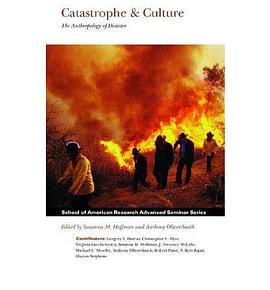
The Anthropology of Disaster
Susanna M. Hoffman / Anthony Oliver-Smith
overblik
At a time of increasing globalization and worldwide vulnerability, the study of disasters has become an important focus for anthropological research-one where the four fields of anthropology are synthesized to address the multidimensionality of the effects to a community’s social structures and relationship to the environment. Using a variety of natural and technological disasters-including Mexican earthquakes, drought in the Andes and in Africa, the nuclear meltdown at Chernobyl, the Exxon Valdez oil spill, the Oakland firestorm, and the Bhopal gas disaster-the authors of this volume explore the potentials of disaster for ecological, political-economic, and cultural approaches to anthropology along with the perspectives of archaeology and history. They also discuss the connection between theory and practice and what anthropology can do for disaster management.
indhold
1. Introduction: Why Anthropologists Should Study Disasters
2. Theorizing Disasters: Nature, Power, and Culture
3. Historical Disaster Research
4. Danger and the No-Risk Thesis
5. Bounding Uncertainty: The Post-Chernobyl Culture of Radiation Protection Experts
6. The Monster and the Mother: The Symbolism of Disaster
7. Popular Media Reframing of Man-Made Disasters: A Cautionary Tale
8. Punctuated Entropy as Culture-Induced Change: The Case of the Exxon Valdez Oil Spill
9. Modeling Protracted Drought, Collateral Natural Disaster, and Human Responses in the Andes
10. Impact of and Response to Drought Among Turkana Pastoralists: Implications for Anthropological Theory and Hazards Research
11. Missing Expertise, Categorical Politics, and Chronic Disasters: The Case of Bhopal