Religious Refugees in the Early Modern World
Douban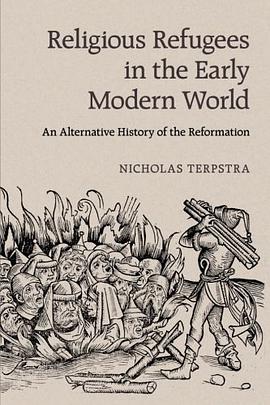
An Alternative History of the Reformation
Nicholas Terpstra
Sinossi
The religious refugee first emerged as a mass phenomenon in the late fifteenth century. Over the following two and a half centuries, millions of Jews, Muslims, and Christians were forced from their homes and into temporary or permanent exile. Their migrations across Europe and around the globe shaped the early modern world and profoundly affected literature, art, and culture. Economic and political factors drove many expulsions, but religion was the factor most commonly used to justify them. This was also the period of religious revival known as the Reformation. This book explores how reformers' ambitions to purify individuals and society fueled movements to purge ideas, objects, and people considered religiously alien or spiritually contagious. It aims to explain religious ideas and movements of the Reformation in nontechnical and comparative language.
- Proposes a reinterpretation of the Reformation period that, by highlighting the experience of refugees and exiles, also succeeds in integrating Jews and Muslims more fully into the story of religious change in the period
- Traces the historical patterns that have continued to feed the growing numbers of modern religious refugees
- Looks at the ideas of contagion and purification as broader cultural themes that shape art, architecture, and social life
contenuti
Introduction
1. The body of Christ: defined and threatened
2. Purifying the body
3. Dividing the body
4. Mind and body
5. Re-forming the body
6. Re-imagining the body.