Tactical Urbanism
Douban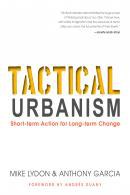
Short-term Action for Long-term Change
Mike Lydon / Anthony Garcia
sinopsis
In the twenty-first century, cities worldwide must respond to a growing and diverse population, ever-shifting economic conditions, new technologies, and a changing climate. Short-term, community-based projects—from pop-up parks to open streets initiatives—have become a powerful and adaptable new tool of urban activists, planners, and policy-makers seeking to drive lasting improvements in their cities and beyond. These quick, often low-cost, and creative projects are the essence of the Tactical Urbanism movement. Whether creating vibrant plazas seemingly overnight or re-imagining parking spaces as neighborhood gathering places, they offer a way to gain public and government support for investing in permanent projects, inspiring residents and civic leaders to experience and shape urban spaces in a new way.
Tactical Urbanism, written by Mike Lydon and Anthony Garcia, two founders of the movement, promises to be the foundational guide for urban transformation. The authors begin with an in-depth history of the Tactical Urbanism movement and its place among other social, political, and urban planning trends. A detailed set of case studies, from guerilla wayfinding signs in Raleigh, to pavement transformed into parks in San Francisco, to a street art campaign leading to a new streetcar line in El Paso, demonstrate the breadth and scalability of tactical urbanism interventions. Finally, the book provides a detailed toolkit for conceiving, planning, and carrying out projects, including how to adapt them based on local needs and challenges.
Tactical Urbanism will inspire and empower a new generation of engaged citizens, urban designers, land use planners, architects, and policymakers to become key actors in the transformation of their communities.