Soviet Airborne Forces 1930–91
Google Livres Douban Goodreads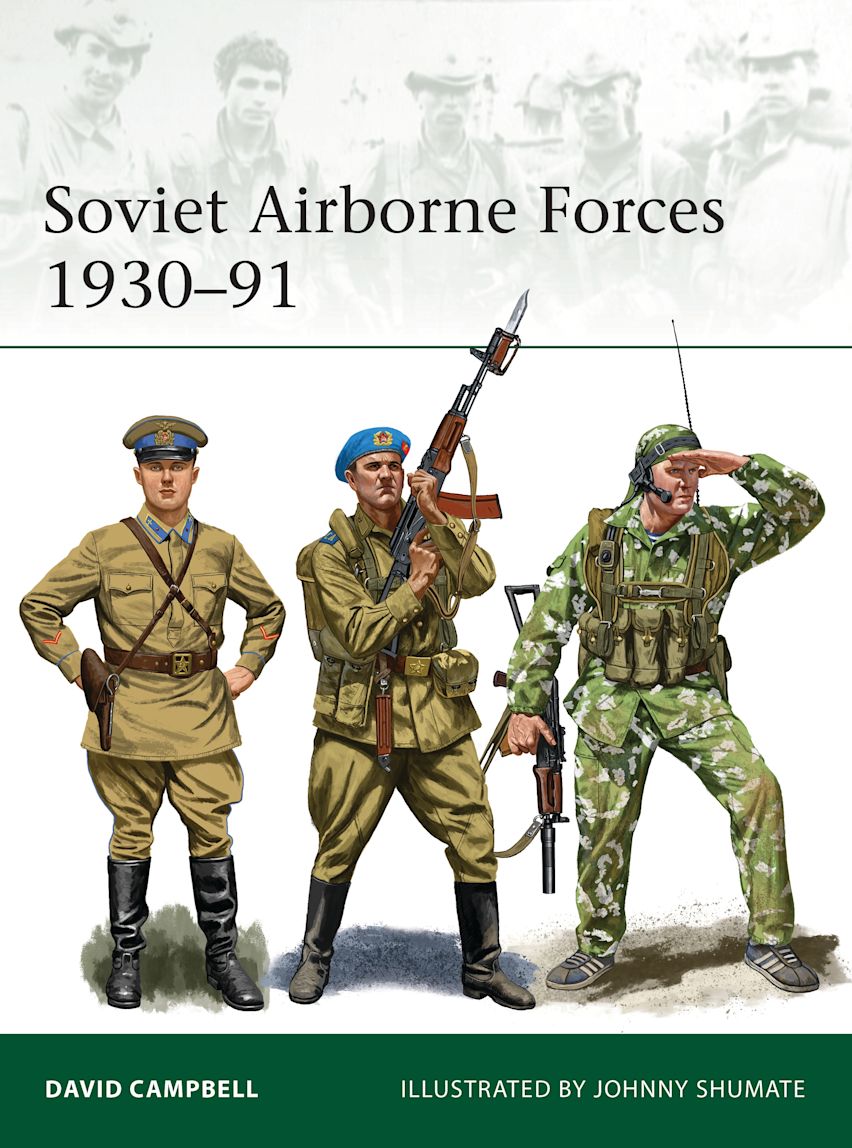
David Campbell / Johnny Shumate
résumé
Established in 1932, the Vozdushno-desantnye voyska (‘air-landing forces', or VDV) of the Red Army led the way in airborne doctrine and practice. Though they were initially handicapped by a lack of infrastructure, due in part to a turbulent political climate in the 1930s, they still conducted major drops during World War II, including at the Dnepr River in September 1943.
After the war ended, the VDV became independent of the Air Force and were elevated to the role of strategic asset. The newly rebuilt divisions were now organized and trained to conduct deep insertions behind enemy lines, attacking command-and-control facilities, lines of communication, and key infrastructure targets such as nuclear power plants. This training came into play in numerous Cold War confrontations, including Soviet operations in Hungary (1956) and Czechoslovakia (1968). During the Soviet war in Afghanistan (1979-89), the VDV proved to be the most formidable of the Mujahideen's opponents, with the development of the air assault concept - the transport, insertion and support of air-landed troops by helicopter rather than parachute.
This title explores the development of the VDV from their conception in 1930 to their role in the Cold War and in the later invasion of Afghanistan. Supported by contemporary photography and specially commissioned artwork of uniforms and battlescenes, this title is a comprehensive and engaging guide to the history of airborne forces in the Soviet period.
contenus
Introduction & overview
Pre-war origins
Service in WWII
New developments 1945-79
Afghanistan 1979-89
Weapons, equipment & vehicles
Conclusion
Bibliography
Index