Religious Culture and Violence in Traditional China
豆瓣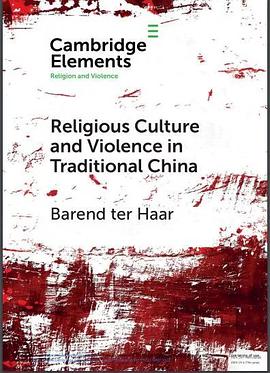
Barend J. ter Haar
簡介
The basis of Chinese religious culture, and with that many aspects of daily life, was the threat and fear of demonic attacks. These were inherently violent and could only be counteracted by violence as well - even if this reactive violence was masked by euphemisms such as execution, expulsion, exorcisms and so on. At the same time, violence was a crucial dimension of the maintenance of norms and values, for instance in sworn agreements or in beliefs about underworld punishment. Violence was also an essential aspect of expressing respect through sacrificial gifts of meat (and in an earlier stage of Chinese culture also human flesh) and through a culture of auto-mutilation and ritual suicide. At the same time, conventional indigenous terms for violence such as bao 暴 were not used for most of these practices since they were not experienced as such, but rather justified as positive uses of physical force.
目錄
Preface 1
Setting the Stage 2
What Is Violence? 7
The Demonological Substrate 11
Messianic and Millenarian Traditions 26
The Enforcement of Norms and Social Values 37
Sacrifice and Its Counter-Discourse 49
Self-Inflicted Violence 55
Intrareligious Conflicts 59
Concluding Comments 64
Bibliography 67