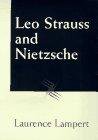
Leo Strauss and Nietzsche
Douban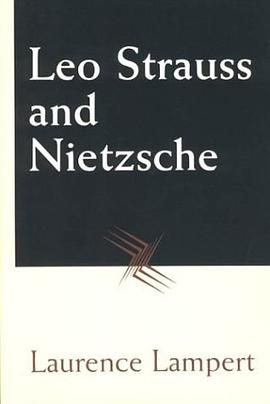
Laurence Lampert
overblik
The political philosopher Leo Strauss has been credited by conservatives with the recovery of the great tradition of political philosophy stretching back to Plato. Strauss left a strongly negative assessment of Nietzsche as the modern philosopher most at odds with that tradition and most responsible for the sins of 20th-century culture - relativism, godlessness, nihilism, and the breakdown of family values. In fact, this apparent denunciation has become so closely associated with Strauss that it is often seen as the very core of his thought. This text offers a reassessment of the Strauss-Nietzsche connection. The author undertakes a searching examination of the key Straussian essay, "Note on the Plan of Nietzsche's `Beyond Good and Evil'". He shows that this essay, written toward the end of Strauss's life and placed at the centre of his final work, reveals an affinity for and debt to Nietzsche greater than Strauss's followers allow. Lampert argues that the essay comprises the most important interpretation of Nietzsche ever published, one that clarifies Nietzsche's conception of nature and of human spiritual history, and demonstrates the logical relationship between the essential themes in Nietzsche's thought - the will to power and the eternal return.
indhold
Abbreviations
Introduction
Ch. 1: Strauss’s Study of Nietzsche
Ch. 2: How Leo Strauss Read Nietzsche’s Beyond Good and Evil
Ch. 3: Nietzsche’s Place in the History of Platonic Political Philosophy
Ch. 4: Strauss’s Place in the History of Platonic Political Philosophy
Ch. 5: The Nietzschean Enlightenment
Appendix: “Note on the Plan of Nietzsche’s Beyond Good and Evil”
Leo Strauss
Works Cited
Index to Strauss’s “Note on the Plan of Nietzsche’s Beyond Good and Evil”
General Index