Art, Ethnography and the Life of Objects
豆瓣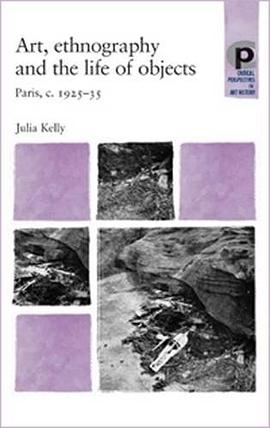
Paris, C.1925 35
Julia Kelly
简介
This book examines the impact of the emergent discipline of ethnography upon the artistic avant-garde in 1920s and 1930s Paris. Anthropology and ethnography provided new and striking ways of rethinking what art could be and the forms it could take. This book demonstrates this with reference to the sculptural work of Giacometti and Picasso in the early 1930s and the rise of the surrealist object. The reception by European artists of objects arriving from colonial territories in the first half of the twentieth century is generally understood through the artistic appropriation of the forms of African or Oceanic sculpture. This book reveals how anthropological approaches to this intriguing material began to affect the ways in which artists, theorists, critics and curators thought about three-dimensional objects and their changing status as 'art', 'artefacts' or 'ethnographic evidence'. This book analyses texts, photographs and art works that cross disciplinary boundaries, through case studies including the Dakar to Djibouti expedition of 1931-33, the Trocadero Ethnographic Museum, and the two art periodicals Documents and Minotaure. It brings out the significance of figures such as Michel Leiris, Marcel Mauss, Marcel Griaule and Georges-Henri Riviere, whose ideas, although little-known today, are of continuing significance and interest. This book is aimed art historians, museologists, curators and historians of anthropology, as well as all those with an interest in the interpretation and reception of non-western art. Through its interdisciplinary and contextual approach, it also provides an important corrective to histories of modern art and the European avant-garde.